




Your Tongue Has a Direct Line to Your Brain. Here’s Why That Matters
Inside the surprising connection between tongue stimulation, cranial nerves, pons brain function, and microcurrent
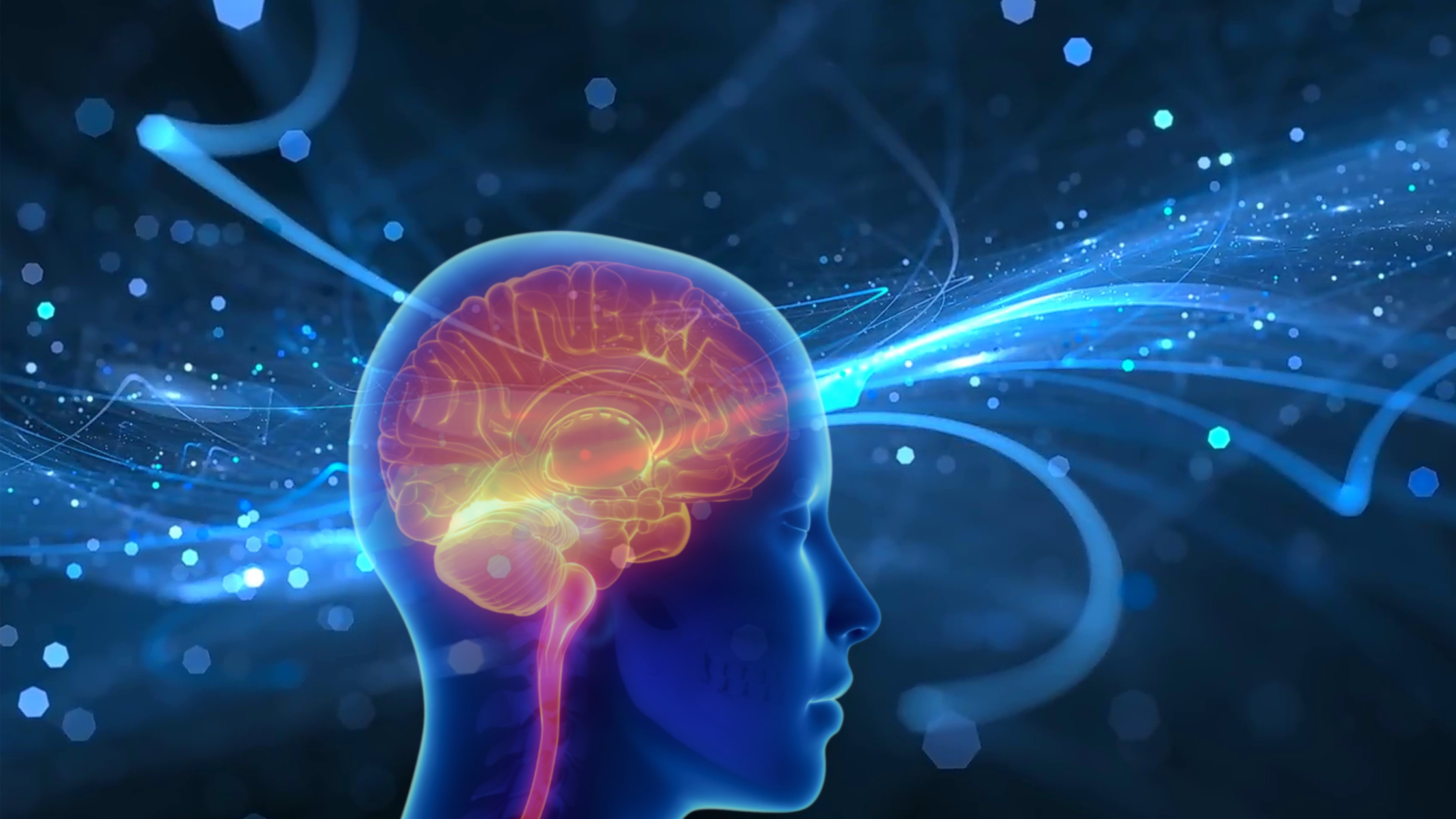
Overview: The Tongue-Brain Connection
In this article, we’ll look at:
- What the pons does and why this small part of the brainstem matters
- How cranial nerves connect the tongue, brainstem, and brain
- Why the tongue provides such a rich source of sensory input
- What neuroplasticity has to do with tongue stimulation
- How the Tongue Stimulator makes microcurrent treatment easier
If you’ve been part of the Pain Free For Life community for a while, you’ve probably heard us talk about stimulating the tongue with microcurrent. If you’re encountering the idea for the first time, your immediate reaction may be a perfectly reasonable one:
Why would I want to put something electrical on my tongue?
The answer takes us into one of the most interesting areas of the nervous system: the brainstem, and more specifically, the pons.
The pons is small compared with the cerebral cortex most of us picture when we think about the brain, but it occupies an extraordinarily busy location. Signals involved in movement and sensation travel through this region, while structures within and around the pons participate in functions including sleep and wakefulness, breathing, hearing, balance, facial sensation, eye movement, and pain processing.
For Pain Free For Life, that makes the relationship between the tongue, cranial nerves, and brainstem particularly interesting.
What Is the Pons and What Does It Do?
Understanding pons brain function begins with its location in the brainstem, between the midbrain above it and the medulla oblongata below.
Its name comes from the Latin word for bridge, which is an appropriate description. The pons contains major pathways carrying information through the central nervous system and extensive connections with the cerebellum, which plays an important role in movement and coordination.
But the pons isn’t simply a cable carrying information from one place to another.
Structures within it participate in sleep and alertness, breathing, sensory processing, movement, balance, hearing, facial sensation, and pain signaling. The pons is also closely associated with several cranial nerves, giving it an important place in the constant flow of information between the brain and the rest of the body.
That combination of relay station and processing center is what makes this area so intriguing when we begin talking about tongue stimulation.
The Cranial Nerve Connection
The body has 12 pairs of cranial nerves that emerge directly from the brain and brainstem rather than traveling first through the spinal cord.
Together, they help manage an impressive range of functions, including smell, vision, eye movement, facial sensation, chewing, facial expression, hearing, balance, swallowing, tongue movement, and communication between the brain and internal organs.
Several cranial nerves are particularly associated with the pons:
- Trigeminal nerve (Cranial Nerve V): facial sensation and chewing
- Abducens nerve (Cranial Nerve VI): eye movement
- Facial nerve (Cranial Nerve VII): facial movement and part of taste sensation
- Vestibulocochlear nerve (Cranial Nerve VIII): hearing and balance
The trigeminal system is especially interesting in the context of sensation because it carries information involving touch, pressure, pain, temperature, and proprioception from areas of the face and mouth.
Pain Free For Life readers may also recognize another cranial nerve we discuss frequently: the vagus nerve, or Cranial Nerve X.
The vagus nerve originates lower in the brainstem, primarily from nuclei in the medulla rather than the pons. Its extensive connections throughout the body offer another fascinating example of how brainstem pathways can influence functions well beyond the head.
For a broader look at how we work with the nervous system, Microcurrent for Brain Health explores microcurrent alongside sleep, circulation, cellular energy, and nervous-system support.
The tongue gives us another interesting pathway to explore.
Why the Tongue?
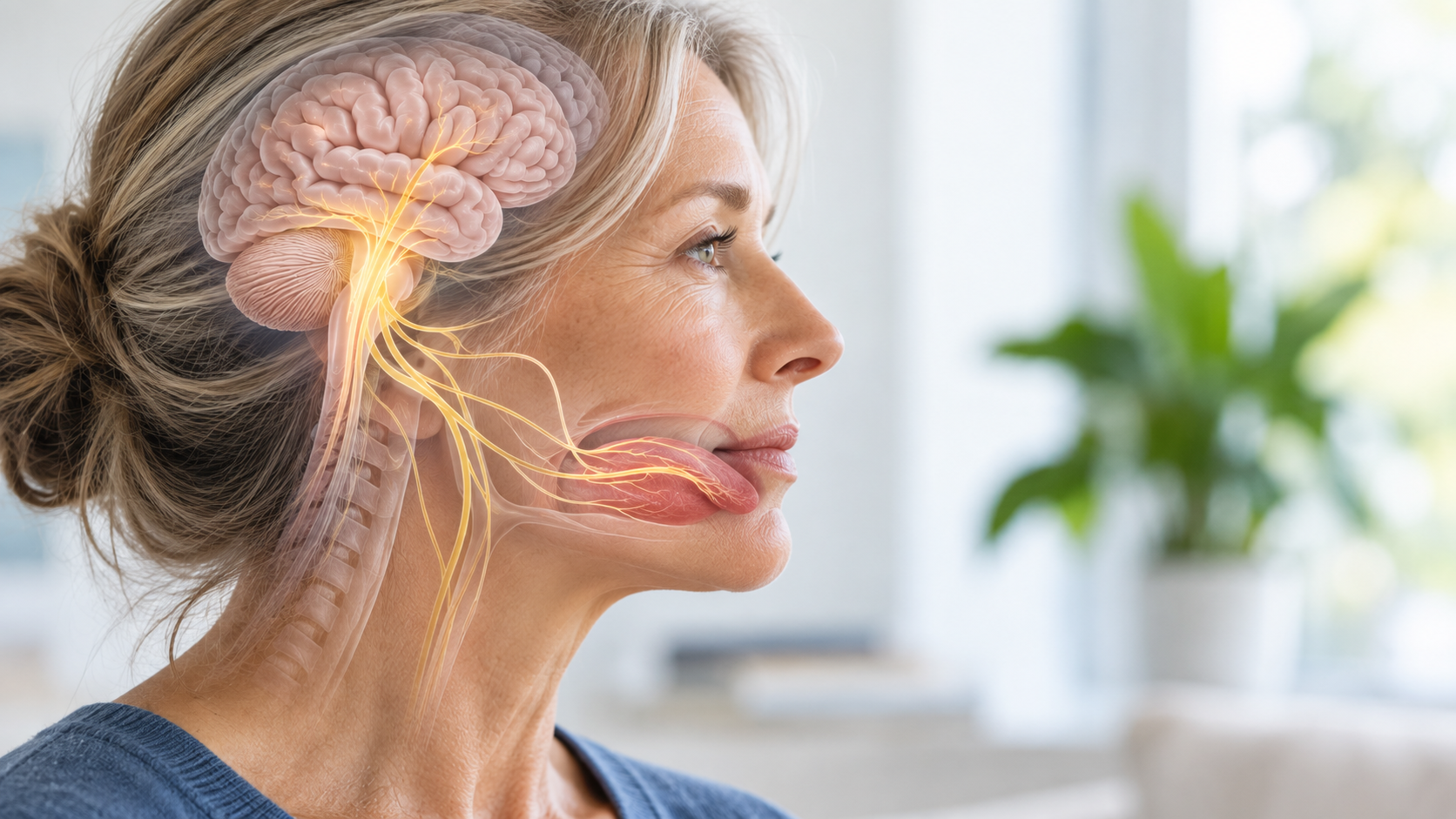
Your tongue may seem like a simple muscle until you consider everything it has to do.
It detects touch, temperature, pain, texture, and taste. It continually provides the nervous system with information while you eat, drink, speak, swallow, and move your mouth.
And that information doesn’t travel through just one nerve.
General sensation from much of the front of the tongue travels primarily through the lingual nerve, a branch of the trigeminal nerve. Taste from much of that same region is carried through the chorda tympani, a branch of the facial nerve. The back of the tongue involves the glossopharyngeal nerve, while the hypoglossal nerve controls much of the tongue’s movement.
In other words, the tongue sits at a remarkably rich sensory crossroads.
Rather than thinking about tongue stimulation as physically sending electrical current directly to the pons, it is more accurate to think about stimulating a highly innervated sensory surface whose information travels through cranial-nerve and brainstem networks.
That distinction helps explain why the tongue has attracted interest in the broader field of neuromodulation.
Taking It Further: Neuroplasticity and Tongue Stimulation
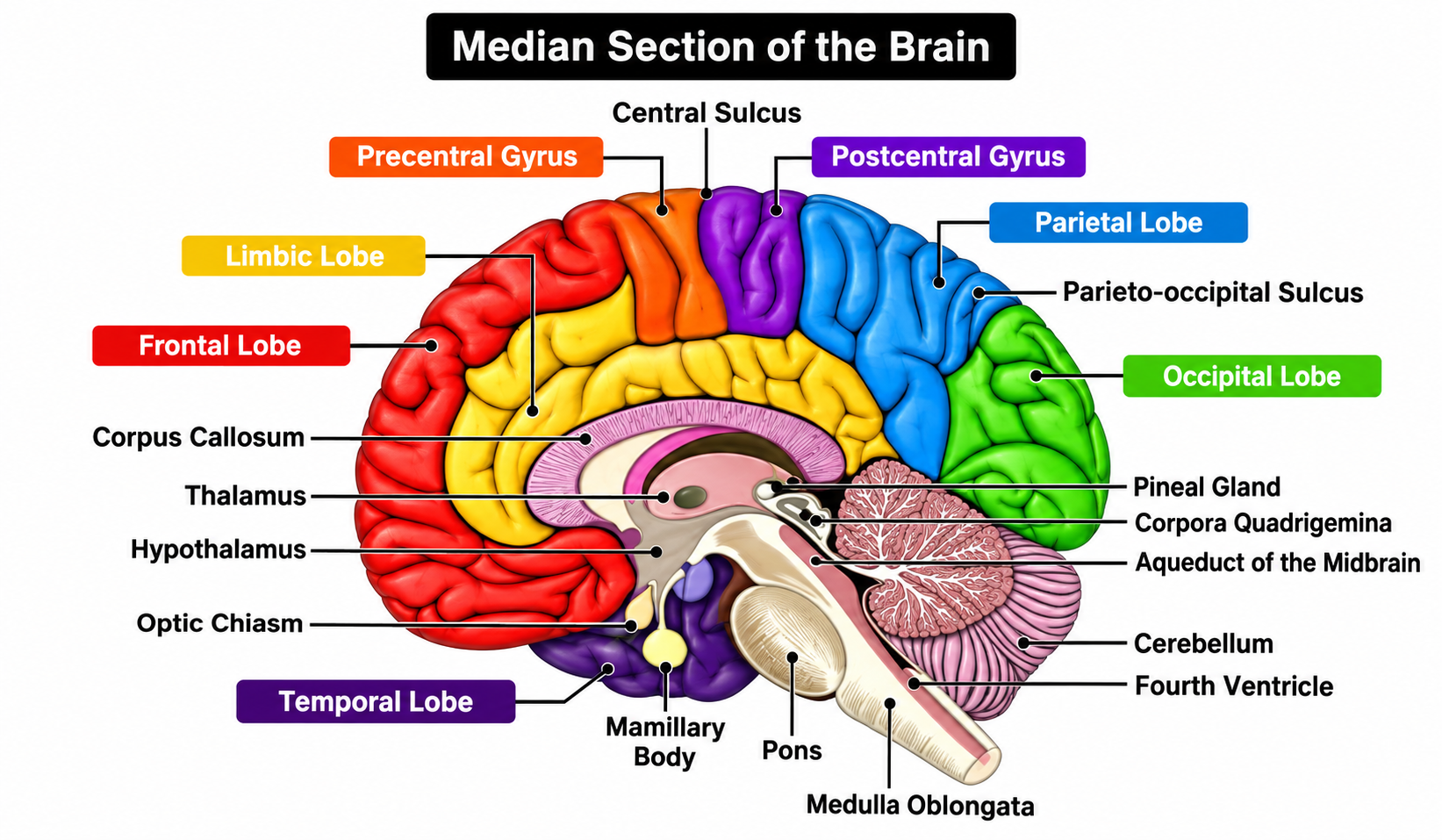
One of the concepts that makes tongue stimulation particularly fascinating is neuroplasticity—the nervous system’s ability to change its activity and connections in response to experience and repeated input.
Norman Doidge brought this idea to a broad audience in The Brain’s Way of Healing, where he described emerging approaches that used sensory stimulation, including stimulation of the tongue, as part of neurorehabilitation.
Tongue-based neuromodulation has continued to attract scientific interest since then. Rather than thinking of the tongue as a switch capable of “resetting” the brain, researchers are interested in how repeated sensory input delivered through the tongue may influence neural networks involved in processing and adaptation.
That becomes particularly interesting when we consider how interconnected the brainstem is with movement, sensation, balance, and other functions.
The vestibulocochlear nerve carries hearing and balance information into the brainstem. The trigeminal system carries extensive sensory information from the face and mouth. Meanwhile, the cerebellum communicates extensively with the pons as part of the networks involved in movement and coordination.
The tongue therefore gives us an unusual sensory entry point into a much larger nervous-system conversation.
Where Microcurrent Enters the Picture
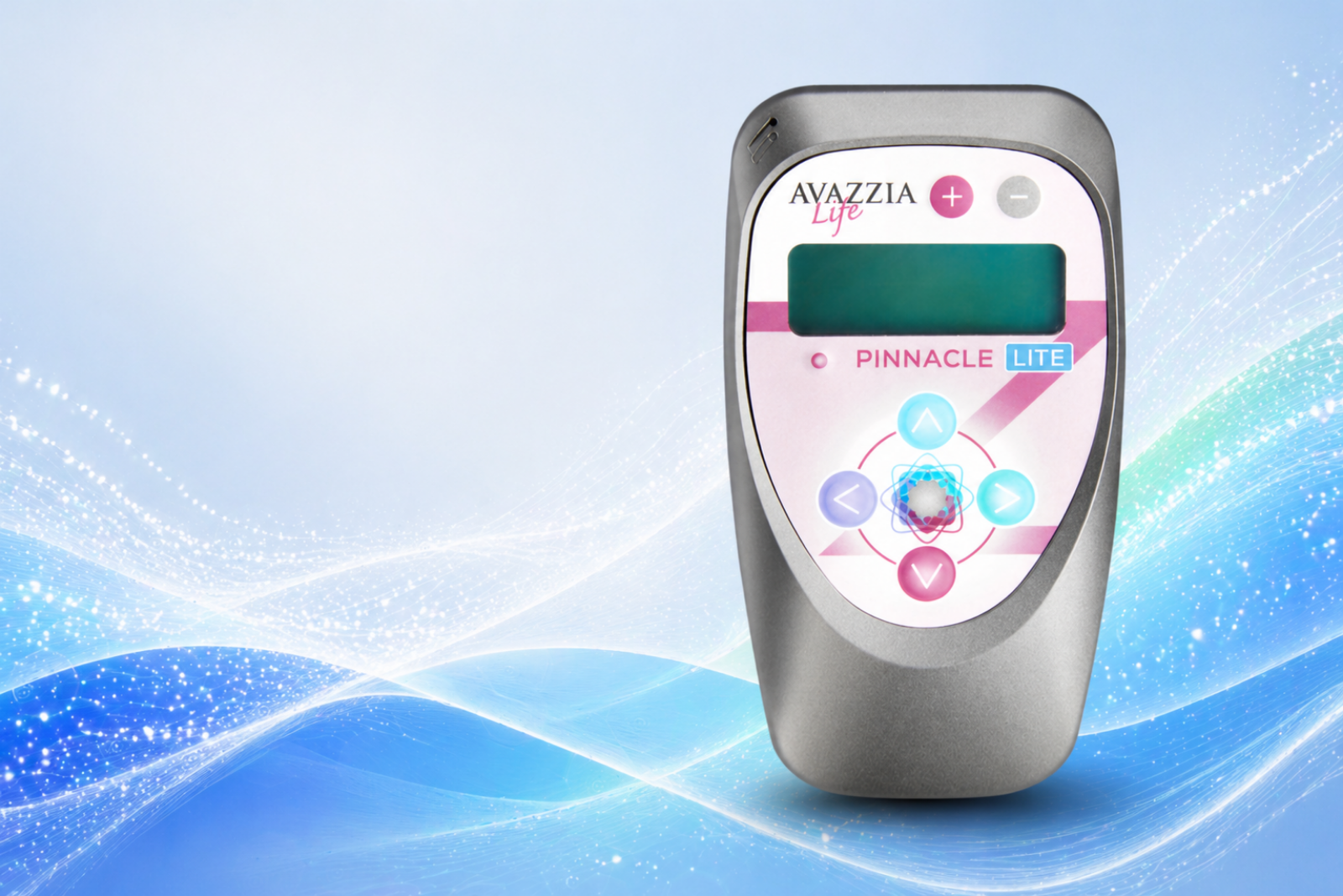
Pain Free For Life has explored microcurrent on the tongue for years because it gives us a way to deliver controlled electrical stimulation through a highly innervated sensory surface.
The treatment doesn’t require us to physically reach the pons. The tongue supplies the sensory input, and cranial nerves carry information toward the brainstem and brain.
Think of it less as sending electricity directly into a particular brain structure and more as providing specific sensory stimulation through pathways the nervous system already uses constantly.
This also helps explain why technique matters. Electrical tongue stimulation isn’t simply a matter of placing two electrodes somewhere on the tongue and turning on a device. Electrode placement, device settings, frequency, treatment time, and the particular protocol being used all influence the treatment experience.
If you’re ready to move from the anatomy into the practical application, our guide to cranial nerve stimulation with microcurrent takes the next step and looks more closely at how Pain Free For Life incorporates tongue stimulation into a specific microcurrent protocol.
Why We Love the Tongue Stimulator
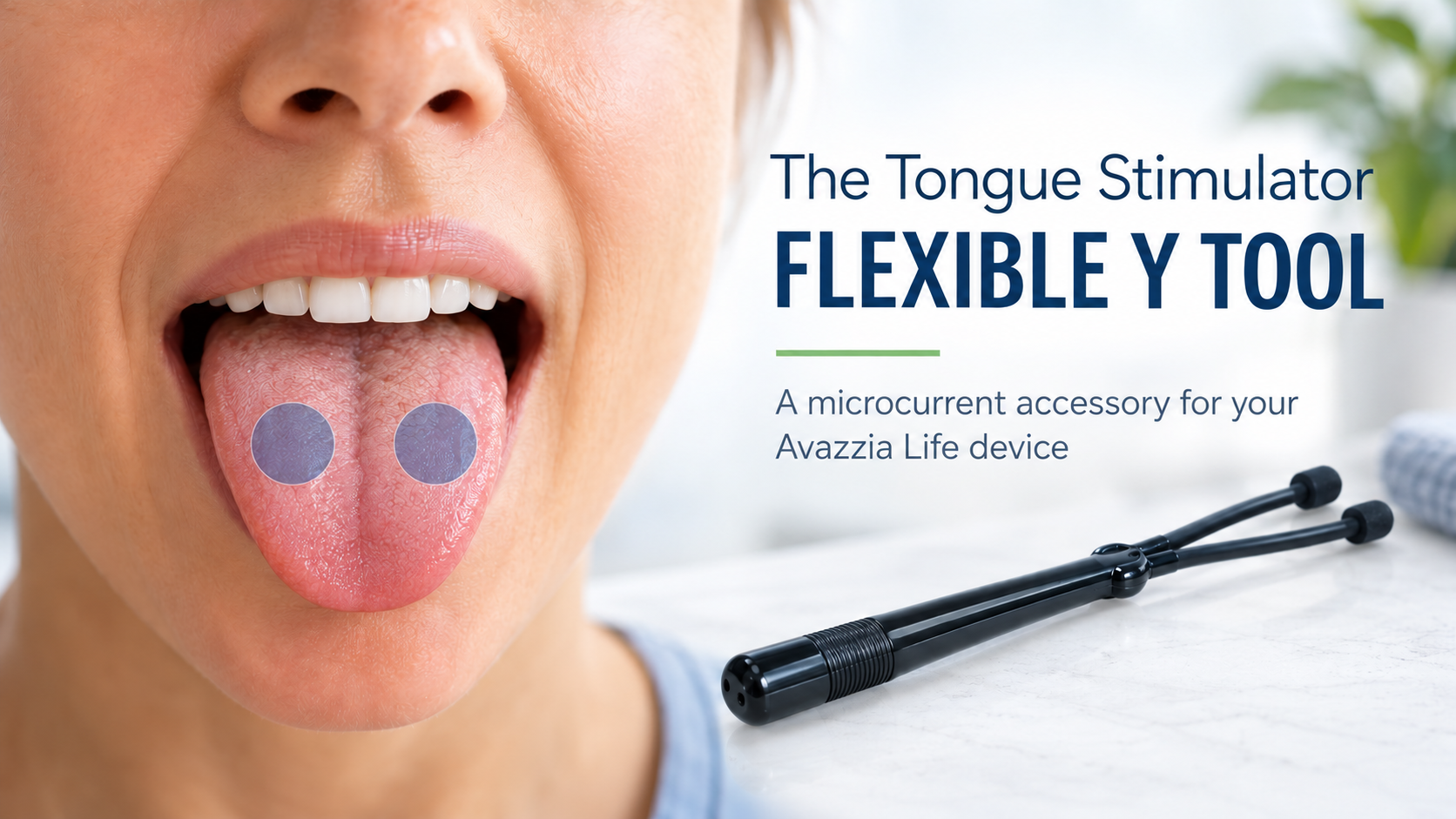
Once you understand how richly innervated the tongue is, using it as a treatment area makes much more sense. Actually getting a standard microcurrent accessory to sit comfortably on it was another matter.
Most electrodes simply weren’t designed for the mouth. Some were too large, while others placed the contact points farther apart than we wanted for tongue protocols. We needed an accessory designed around the way this treatment is actually performed.
The result was the Flexible Y Tool, better known as the Tongue Stimulator.
Its two flexible contact points can be positioned comfortably on the tongue and connect to a compatible Avazzia Life microcurrent device, giving you a much simpler way to perform tongue protocols without trying to make another electrode work for a job it wasn’t designed to do.
It’s a small accessory, but for anyone interested in exploring tongue microcurrent, it makes a rather unusual treatment surprisingly straightforward to perform at home.

Explore the Flexible Y Tool (Tongue Stimulator)
What Settings Do We Use?
This depends on your Avazzia Life device and the protocol you’re following.
Within Pain Free For Life, specific frequencies have traditionally been used for different tongue microcurrent applications, with the appropriate setting depending on the device and protocol.
The important thing to remember is what we’re actually doing: applying electrical stimulation to the tongue, where sensory information enters cranial-nerve pathways and travels into a much larger network involving the brainstem and brain.
Different tongue-stimulation technologies use different frequencies, intensities, treatment times, and stimulation patterns depending on what they’re designed to do. With an Avazzia Life device, the simplest approach is to follow the tongue protocol created for your particular device rather than trying to translate settings from another technology.
If you’re unsure which setting, accessory, or protocol applies to your device, our team can help. If Treatment Coordinator support is included with your eligible membership, your coordinator can also help you understand the appropriate protocol for your equipment and treatment needs.
What About Balance, Dizziness, and Hearing?
This is another area where tongue stimulation becomes especially interesting.
Balance depends on communication among the inner ear, vestibular system, brainstem, cerebellum, eyes, muscles, and sensory information coming from the rest of the body. The pons contains important vestibular and cerebellar connections, while Cranial Nerve VIII carries hearing and balance information into the brainstem.
Tongue-based neuromodulation has also been investigated as part of rehabilitation approaches involving balance.
That doesn’t mean every case of dizziness or poor balance should be approached with tongue microcurrent. Dizziness and balance problems can have many causes, including inner-ear disorders, neurological conditions, medication effects, cardiovascular problems, migraine, infection, and other medical issues.
New, severe, persistent, or unexplained dizziness or hearing changes deserve appropriate medical evaluation.
For an appropriately evaluated person following a specific protocol, however, tongue stimulation remains an intriguing way of working with sensory input and nervous-system pathways.
The Pons Is Part of a Much Bigger Network
Perhaps the most important thing to understand about the pons is that it doesn’t work alone.
The pons doesn’t single-handedly control balance. The vagus nerve doesn’t single-handedly control inflammation. And the tongue isn’t a secret shortcut to one isolated part of the brain.
What we do have is something more interesting: a deeply interconnected nervous system that can receive information, adapt to repeated input, and change how signals are processed over time.
The brainstem sits at the center of an extraordinary amount of that traffic. It participates in sleep, wakefulness, alertness, breathing, cardiovascular regulation, sensory processing, movement, and communication among major regions of the nervous system.
For us, that makes the pons worth understanding because it is part of the remarkable neurological network we’re interacting with whenever we stimulate sensory pathways.
Explore Tongue Microcurrent With the Right Guidance
If you’re interested in tongue stimulation, use the protocol designed for your compatible Avazzia Life microcurrent device and follow current instructions for placement, settings, treatment time, cleaning, and safety.
Because the Tongue Stimulator is used in the mouth, hygiene is especially important. Clean and care for the accessory according to current instructions, and don’t share an oral-use accessory between people. The Flexible Y Tool should only be used with its rubber tips properly attached.
Want to understand how this translates into an actual treatment? Continue with A Ground-Breaking Treatment for Chronic Pain: Cranial Nerve Stimulation for a closer look at the practical application.
If you’re uncertain whether your device supports the appropriate settings or whether tongue stimulation is right for you, our team can help you determine which protocol and accessories fit your equipment.
We’re Here to Help
Have questions about tongue microcurrent, the Tongue Stimulator, or choosing an Avazzia Life device and accessories? Our team is here to help and will respond within 48 business hours.
Call: 1-888-758-0851 in North America or 415-688-2045 internationally
Email: support@painfreeforlife.com
Text: +1 (415) 688-2045
Shop The Sana Shop to explore current Avazzia Life devices and accessories.
For additional education on microcurrent therapy, nervous-system health, treatment protocols, and whole-body wellness, visit the Pain Free Living Lab.
Sources Cited
Cleveland Clinic. Pons: What It Is, Function & Anatomy.
https://my.clevelandclinic.org/health/body/23003-pons
Rahman M, Tadi P. Neuroanatomy, Pons. StatPearls.
https://www.ncbi.nlm.nih.gov/books/NBK560589/
Basinger H, Hogg JP. Neuroanatomy, Brainstem. StatPearls.
https://www.ncbi.nlm.nih.gov/books/NBK544297/
Patel NM, Jozsa F, Das JM. Neuroanatomy, Spinal Trigeminal Nucleus. StatPearls.
https://www.ncbi.nlm.nih.gov/books/NBK539729/
Korczyn AD, Tenenholz Grinberg L. Brainstem Control of Sleep, Wakefulness, Alertness, and Consciousness. Handbook of Clinical Neurology. 2026.
https://pubmed.ncbi.nlm.nih.gov/41896020/
Doidge N. The Brain’s Way of Healing: Remarkable Discoveries and Recoveries from the Frontiers of Neuroplasticity. Penguin Books.