




Why aches, stiffness, and joint pain can become more noticeable during midlife—and why hormones may be only part of the story

| Overview: Menopause and Joint Pain
In this article, we’ll look at:
Hot flashes and night sweats may get most of the attention when we talk about menopause, but many women notice another change during their 40s and 50s: their bodies start to hurt differently. A knee that never used to complain feels stiff. Shoulders and hips ache in the morning. Muscles take longer to recover. An old injury suddenly makes itself known again. Naturally, that raises the question: Is menopause causing this? Hormonal changes may be part of the picture, but they aren’t the only possibility. Sleep, strength, stress, previous injuries, arthritis, and other health conditions can all become relevant at midlife. Our Women’s Health Across Life Stages guide explores some of those broader changes in more detail. The more useful question is what has changed in your body, what may be contributing to it, and what deserves attention now. |
Why Can Joints and Muscles Feel Different During Menopause?
Menopause is defined as 12 consecutive months without a menstrual period, but the hormonal transition begins well before that point. During perimenopause, estrogen and progesterone levels can fluctuate considerably before eventually declining.
Those hormonal changes can influence much more than the reproductive system.
Estrogen receptors are found throughout the musculoskeletal system, including in bone, muscle, cartilage, tendons, ligaments, and other connective tissues. Estrogen also interacts with inflammatory processes and nervous-system pathways involved in pain.
Researchers have increasingly used the term musculoskeletal syndrome of menopause to describe a collection of musculoskeletal changes that may occur around this stage of life. These can include joint and muscle pain, loss of muscle mass, reduced bone density, changes in tendons and connective tissue, and greater susceptibility to some injuries.
That doesn’t mean every aching joint is a direct result of declining estrogen. It does mean that the menopausal transition can change the biological environment in which muscles, joints, bones, and connective tissues are functioning.
Hormones May Be Part of the Story, Not the Whole Story
One of the risks of finally recognizing menopause-related musculoskeletal symptoms is swinging too far in the other direction.
A woman in her 40s or 50s develops joint pain, realizes she’s in perimenopause, and suddenly every new symptom gets attributed to hormones.
Sometimes hormones may be contributing. Sometimes something else needs attention.
Osteoarthritis becomes more common with age. Previous injuries may begin affecting movement differently. Autoimmune conditions can cause joint and muscle symptoms. Thyroid disorders, vitamin deficiencies, medication effects, nerve problems, inflammatory conditions, and other medical issues can overlap with symptoms that appear during menopause.
Even changes in everyday life matter. Perhaps you’ve become less active because your energy is lower. Maybe you’ve stopped strength training, spend more hours sitting, or aren’t recovering from exercise the way you once did.
The fact that pain began during perimenopause or menopause is useful information. It isn’t a diagnosis.
New, persistent, severe, or worsening pain deserves appropriate evaluation, particularly when it is accompanied by significant swelling, redness, or warmth, fever, unexplained weight loss, weakness, numbness, or another meaningful change in health.
Sleep Can Turn Up the Volume on Pain
For many women, menopause doesn’t change only how the body feels during the day. It changes the night, too.
Hot flashes, night sweats, insomnia, anxiety, bathroom trips, and other symptoms can repeatedly interrupt sleep. Pain itself may then make finding a comfortable position more difficult.
The result can become a frustrating cycle: pain disrupts sleep, and poor sleep may increase pain sensitivity the following day.
Research on chronic musculoskeletal pain increasingly supports this two-way relationship. In fact, sleep quality can sometimes predict next-day pain more consistently than daytime pain predicts that night’s sleep.
That makes sleep particularly relevant during menopause. A woman may be dealing simultaneously with hormonal changes, an aching hip, several nighttime awakenings, and reduced recovery. By morning, it can be difficult to separate one factor from another.
Our guide to sleep and chronic pain looks specifically at why an uncomfortable body can interfere with sleep and why a difficult night may make pain harder to manage the following day.
Strength Matters More Than Many Women Realize
Another midlife change is worth paying attention to: muscle.
Adults gradually lose muscle mass and strength with age, and the menopausal transition may add another layer to that process. As strength declines, ordinary activities can begin to demand a larger percentage of your available capacity.
The groceries didn’t suddenly become heavier. The stairs didn’t get steeper. Your garden didn’t move farther from the house. But the strength available to do those activities may have changed.
That matters for joints, too. Muscles help stabilize and support the body during movement. Maintaining strength can make it easier to continue walking, climbing stairs, lifting, carrying, gardening, traveling, and doing the activities that make independence possible.
Resistance exercise is therefore not simply about changing appearance or maintaining athletic performance. For women at midlife and beyond, it can be an important part of preserving muscle, bone, balance, mobility, and function.
If pain currently makes conventional exercise difficult, our blog post, 4 Low-Impact Exercises for Pain Relief, offers gentler ways to keep moving while respecting what your body can comfortably tolerate.
Our blog post, Healthy Aging: Mobility, Energy, and Independence, also looks more broadly at preserving function and independence over time.
What About Hormone Therapy?
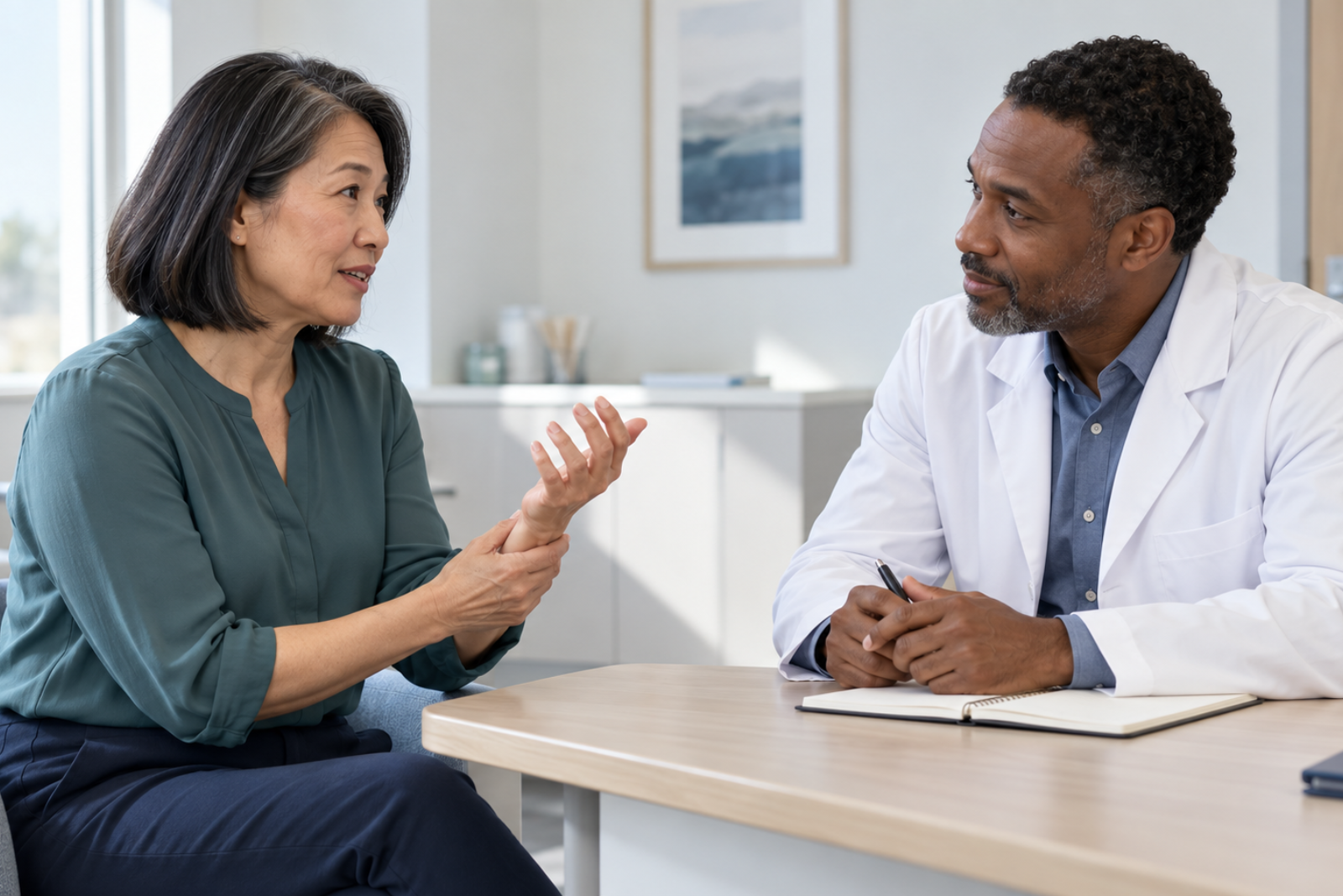
Menopausal hormone therapy can be appropriate for some women and is an important conversation to have with a qualified healthcare provider when symptoms are affecting quality of life.
But joint pain alone doesn’t tell us whether hormone therapy is appropriate—or whether hormones are the primary reason something hurts.
The decision can depend on your symptoms, age, health history, time since menopause, individual risks, treatment goals, and other factors. Hormone therapy also isn’t a substitute for investigating another medical cause of persistent pain.
The larger point is that women deserve more than two simplistic answers: “It’s just menopause” or “Take hormones, and everything will improve.”
Good care looks at the symptoms, the woman experiencing them, her individual risks, and the range of appropriate options available to her.
Stress and the Nervous System Belong in the Conversation
Midlife can be physiologically demanding even before menopause symptoms enter the picture.
Careers may be at their busiest. Children may still need substantial support while aging parents begin needing help of their own. Relationships, finances, caregiving, changing health, and disrupted sleep can all add to the load.
Stress does not mean that joint pain is psychological. But prolonged stress can affect sleep, muscle tension, activity, recovery, and the way the nervous system processes pain.
When pain has persisted for months or years, the nervous system may also become increasingly responsive to signals from an area that has repeatedly hurt. Our guide to microcurrent and nervous-system regulation explores why nervous-system health can become part of the larger chronic-pain conversation.
That is one reason we look beyond the painful joint itself when developing a broader pain-resolution plan. The knee or shoulder still matters, but so can sleep, stress, movement, nutrition, previous injuries, scars, nervous-system regulation, and overall recovery.
Where Microcurrent May Fit
Microcurrent doesn’t replace appropriate evaluation of new joint or muscle pain, and there isn’t one “menopause protocol” that makes sense for every woman. What matters is understanding what you’re actually experiencing and choosing an approach that fits.
That is why microcurrent treatment can look different from one person to another. The area being treated, frequency, accessories, and protocol can all change depending on what needs support and which Avazzia Life device you’re using.
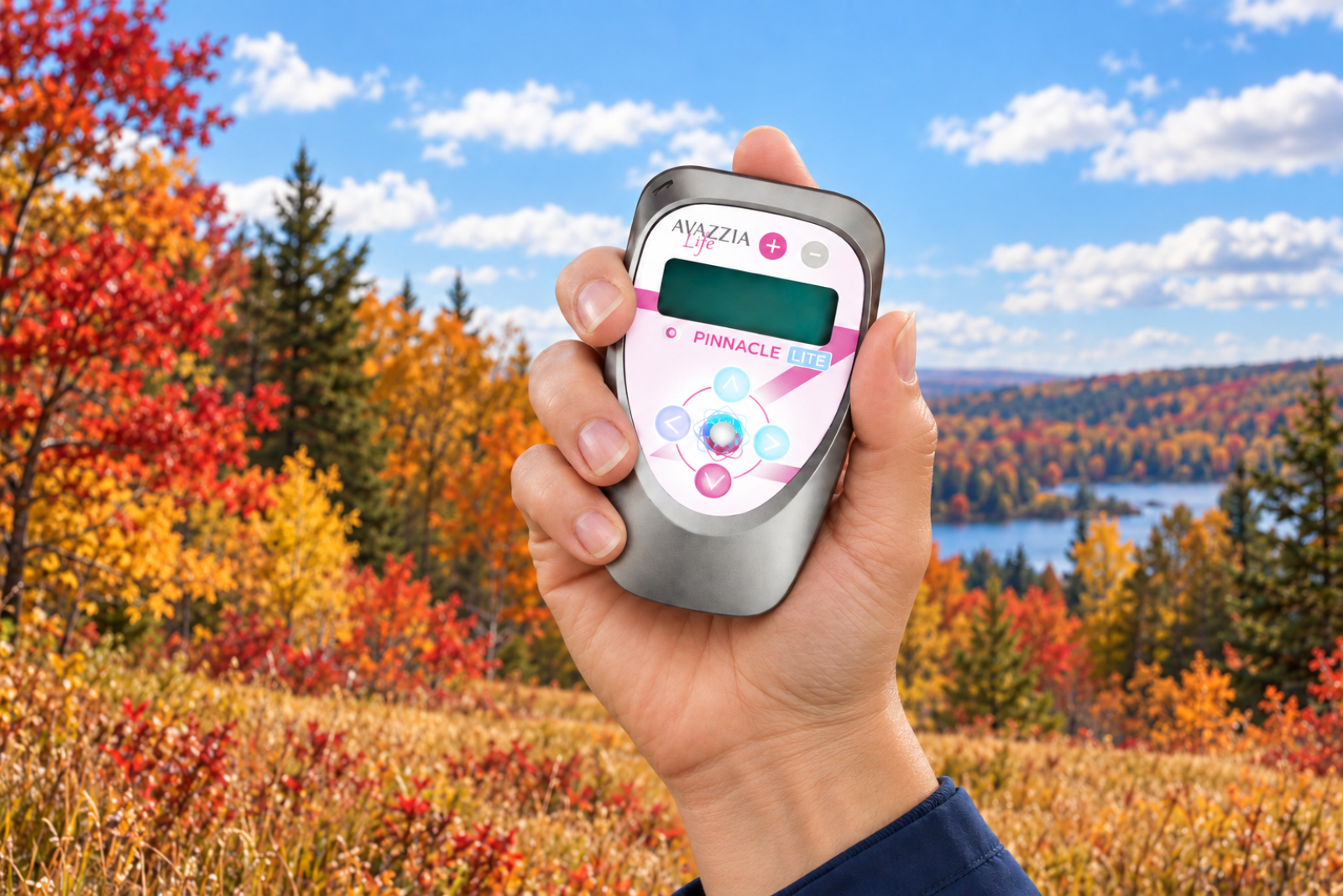
The device pictured above is the Avazzia Life Pinnacle Lite. It offers a wider range of treatment programs for people who want more flexibility in how they use microcurrent at home.
Not sure which device makes sense for you? Our Pain Free For Life Avazzia Life Device Guide walks you through the options and makes it easier to compare the different Avazzia Life devices.
What Might Treatment Actually Focus On?
For one woman, the starting point may be a painful joint or muscle, with treatment directed toward the uncomfortable area and surrounding tissues.
For another, an old surgical or C-section scar may still deserve attention. A scar can be fully healed and no longer painful while still remaining part of the body’s surgical history. Our guide to microcurrent therapy for scar healing explains why we pay special attention to healed scars and surrounding tissues.
If disrupted sleep, prolonged stress, or nervous-system strain has become a significant part of the picture, Vagus Nerve Stimulation or another nervous-system-focused protocol may be a better fit.
And when several concerns are happening at once, the goal isn’t necessarily to throw every available protocol at the problem. It may be more useful to decide what deserves attention first and what can wait.
This is where personalized guidance can make microcurrent considerably less overwhelming. Our team of friendly and knowledgeable Treatment Coordinators can help clients think through priorities, device use, treatment technique, pacing, and when a more complex situation deserves additional review. You can meet more of the people behind that support in Behind the Scenes at Pain Free For Life: Small Team. Big Results..
Understanding what has changed—and what may be contributing to it—gives you a much better starting point for deciding what deserves attention next.
Looking at the Whole Picture
Menopause can affect musculoskeletal health, but not every new ache or pain should automatically be blamed on hormones.
If your knees suddenly hurt, you’re recovering more slowly, or an old problem has returned, pay attention to what changed and bring that information to your healthcare provider.
Hormones may matter. So may sleep, strength, movement, nutrition, stress, an old injury, a scar, an underlying medical condition, or your nervous system. Often, several pieces deserve attention at once.
Midlife brings change, but persistent pain shouldn’t simply be written off as just menopause. Supporting your body now can help protect the strength, movement, energy, and independence you want for the years ahead.
We’re Here to Help
Have questions about chronic pain, microcurrent therapy, nervous-system support, or choosing an Avazzia Life device? Our team is here to help and will respond within 48 business hours.
Call: 1-888-758-0851 in North America or 415-688-2045 internationally
Email: support@painfreeforlife.com
Text: +1 (415) 688-2045
For additional education on microcurrent therapy, chronic pain, women’s health, nervous-system regulation, and whole-body wellness, visit the Pain Free Living Lab.
You can also visit The Sana Shop to explore Avazzia Life microcurrent devices, accessories, and other wellness tools.
Sources Cited:
The Menopause Society. Menopause Topics: Hormone Therapy.
https://menopause.org/patient-education/menopause-topics/hormone-therapy
World Health Organization. Menopause.
https://www.who.int/news-room/fact-sheets/detail/menopause
Wright VJ, et al. The Musculoskeletal Syndrome of Menopause. Climacteric. 2024.
https://pubmed.ncbi.nlm.nih.gov/39077777/
National Institute on Aging. What Is Menopause?
https://www.nia.nih.gov/health/menopause/what-menopause