




| Overview: What Keeps Inflammation Active, and How Food Can Help
Inflammation rarely appears out of nowhere. More often, it builds as the body responds to stress, irritation, overload, poor recovery, or ongoing immune activity. That is one reason it can feel so frustrating. You may be trying to do the right things, yet your body still feels reactive, tired, swollen, achy, or harder to settle than it should be. Food is not the whole story, but it is part of the story. What you eat can either help create a steadier internal environment or add more pressure to a system that is already working hard. For some people, histamine may also be part of the picture, especially when inflammation is accompanied by headaches, flushing, digestive issues, skin symptoms, or a sense that the body is reacting to more than it used to. In this article, we’ll look at:
|
What is the root cause of inflammation?
One of the biggest misunderstandings about inflammation is the idea that it always has one simple cause.
Sometimes there is a clear trigger, such as an injury, infection, or acute illness. But when inflammation becomes chronic, the pattern is usually more layered than that. Poor sleep can prevent the body from repairing itself properly. Chronic stress can leave the nervous system on alert. Blood sugar swings, digestive strain, dehydration, environmental stressors, old injuries, and highly processed foods can all add to the total load over time.
Inflammation does not always show up the same way in every body, and it rarely stays confined to one area. Joint pain, fatigue, brain fog, digestive discomfort, skin changes, headaches, slower recovery, and a sense that the body is just not as steady as it used to be can all be part of the same broader story.
If you want to go deeper into that bigger picture, our A Complete Guide to Inflammation: Understanding Its Causes, Symptoms, and Treatment Options walks through how inflammation works, why it stays active, and what can help calm it:
What foods can add to inflammation?
Your diet can help support healing, but it can also add to the burden when the body is already under stress.
This does not mean every symptom comes down to diet, and it does not mean you need to eat perfectly to feel better. It does mean that what you eat can shape how stable, nourished, and supported your body feels over time.
Highly processed foods, excess sugar, fried foods, alcohol, and meals that leave you swinging between energy spikes and crashes can all make it harder for the body to settle. For some people, these foods contribute to digestive stress. For others, they seem to intensify fatigue, headaches, pain flares, or a general sense of inflammation.
That is part of what makes anti-inflammatory eating useful. It is less about following a rigid food philosophy and more about helping the body receive steadier signals. Whole foods, better hydration, quality protein, fiber, minerals, and meals that support steadier blood sugar can all help reduce the sense that the body is constantly fighting to regain balance.
Does histamine cause inflammation?
Histamine can contribute to inflammation, but it is usually best understood as one part of a larger picture rather than the only explanation.
Histamine is a natural compound involved in immune activity, signaling, and the body’s response to perceived threats. That is not automatically a problem. But when histamine builds faster than the body can clear it, symptoms can start to spread beyond what most people think of as a typical allergy response.
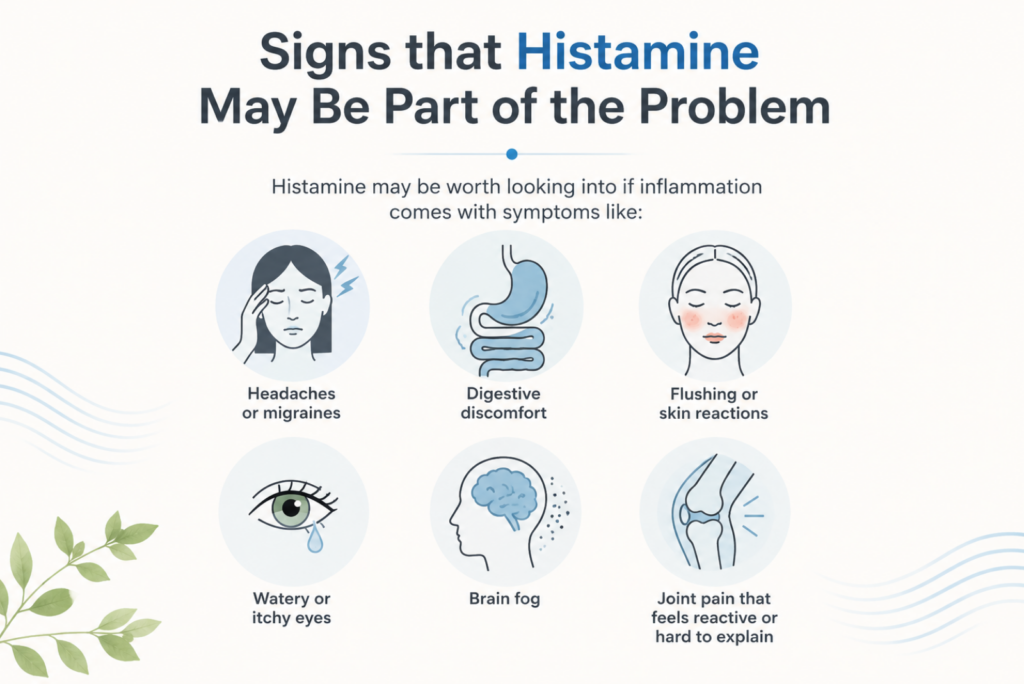
This is one reason some people with inflammation also notice headaches, flushing, itchy or watery eyes, digestive issues, brain fog, joint discomfort, skin reactions, or a sense that certain foods leave them feeling worse rather than better. Histamine is not the answer for everyone, but it can be part of the story for some people.
What histamine actually does in the body
Histamine helps the body respond to triggers. It plays a role in immune defense, cell communication, and the inflammatory process itself. In the right amount, that response is protective. When the system becomes overloaded, it can start to feel less protective and more disruptive.
Signs that histamine may be part of the problem
For some people, histamine is not the whole story, but it is an important piece of it. It can help explain why inflammation sometimes feels more reactive, more layered, or harder to connect to one single cause. If you are wondering whether histamine may be part of the picture, here are some common signs to watch for.
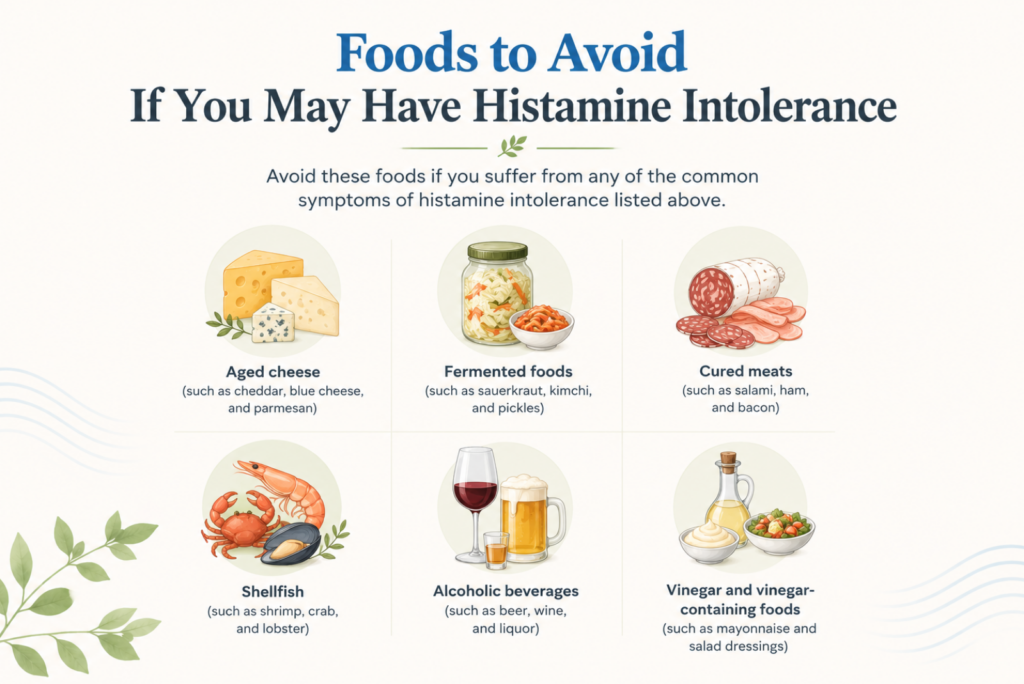
Foods that may raise histamine for some people
If histamine may be part of the picture, food choices can start to matter in a more specific way. Some foods are naturally higher in histamine, while others may make a reactive pattern harder to calm. The visual below highlights some of the most common foods people choose to cut back on when histamine intolerance seems to be part of the story.
What to eat when inflammation is running high
In real life, it often starts with simpler meals, steadier protein intake, more fiber, better hydration, and foods that feel nourishing rather than depleting. It may mean choosing fresh foods more often than packaged ones, paying attention to how you feel after meals, rather than only following generic advice. It may mean reducing foods that consistently leave you feeling more swollen, foggy, uncomfortable, or reactive.
This kind of eating is not about punishment. It is about helping the body receive what it needs to regulate and repair.
For some people, that may mean building meals around fish, eggs, beans, lentils, vegetables, and water-rich summer foods. Hydration support does not have to come from water. Foods with a high water content can help support hydration in a gentler, more consistent way throughout the day, which matters when inflammation, heat, fatigue, or recovery are already putting more pressure on the body.
Helpful options include:
- Cucumber, which is especially water-rich and also contains antioxidants and anti-inflammatory compounds
- Celery, which supports hydration and contains natural anti-inflammatory agents
- Watermelon, which offers both hydration and lycopene, a compound linked to joint support
- Bell peppers, which are hydrating and rich in vitamin C, an important nutrient for tissue repair
- Cantaloupe and other melons, which are refreshing, water-rich, and nutrient-dense
- Salads built around leafy greens, which can help support hydration while also adding fiber and antioxidants
For others, it may mean noticing that certain foods feel fine in small amounts but become a problem when stress is high, and sleep is poor. There is room here for discernment.
If summer meals are top of mind right now, our post on Healthy Grilling and Camping Foods for Your Family offers practical ideas that feel seasonal without drifting into the typical cookout foods that leave you feeling worse afterward.
And if you want a helpful companion piece on recovery nutrition, our feature on protein and chronic pain recovery in the June edition of Pain Free Living Magazine is a good next read.
Why food works best as part of a bigger pain resolution plan
Food matters, but it tends to work best when it is part of a larger pattern of support.
A more supportive way of eating can help calm the body, but if sleep is poor, stress is high, hydration is low, and the nervous system is stuck in a protective state, progress may still feel slower than you want. That is why the Pain Free For Life approach keeps returning to the same broader framework: stress reduction, nutrition, sleep, movement, and microcurrent working together (aka. The Hache Protocol™).
This matters because inflammation is rarely just a food issue. It is often a systems issue.
If inflammation has been part of your pain picture for a while, our Free Report: Autoimmune Solutions may also be useful. It helps explain why immune stress, digestion, fatigue, and pain often overlap, and why a whole-body approach matters.
Frequently Asked Questions
What is the root cause of inflammation?
There is rarely one single root cause. Chronic inflammation usually reflects a combination of stress, poor recovery, blood sugar instability, digestive strain, processed foods, immune activity, environmental load, and other factors that keep the body in a more reactive state.
Does histamine cause inflammation?
Histamine can contribute to inflammation. It is part of the body’s normal immune response, but when levels build faster than the body can clear them, it may add to symptoms such as headaches, flushing, digestive issues, itching, swelling, or pain. Learn more here: Understanding the Connection Between Histamine Intolerance and Pain.
Can food make inflammation worse?
Yes. For some people, highly processed foods, excess sugar, fried foods, alcohol, and meals that create big blood sugar swings can make inflammation feel harder to calm. Learn more in our blog: Inflammation Foods to Avoid and What to Eat Instead.
What foods may help lower inflammation?
Supportive foods often include whole, minimally processed meals built around vegetables, quality protein, fiber, healthy fats, and better hydration. The goal is not perfection. It is to give the body steadier support. Learn more in our blog: Your Comprehensive Guide to an Anti-Inflammatory Diet.
How do I know if histamine is part of my inflammation?
Histamine may be worth looking into if inflammation is accompanied by symptoms such as headaches, skin reactions, flushing, watery eyes, digestive issues, or a strong reaction to certain foods or environmental triggers.
Keep building from here
If this article helped you connect a few dots, keep going.
The body often becomes easier to understand once you stop looking for one isolated cause and start paying attention to the larger pattern. Inflammation, food, histamine, sleep, digestion, and stress are rarely separate conversations for long. More often, they are all part of the same terrain the body is trying to navigate.
That is why a whole-body approach like The Hache Protocol For Pain Resolution™ matters.
You do not need to figure everything out at once. A few steady changes, made with greater awareness and less pressure, can begin to shift how the body feels over time. And often, that is how meaningful progress starts, not all at once, but through a cascade of choices the body can actually respond to.