





Microcurrent Therapy for Arthritis in Dogs, Cats, Horses, and Other Pets
How microcurrent may fit alongside veterinary care, healthy weight, movement, and other approaches to help animals with osteoarthritis stay comfortable and mobile
Creaky backs, stiff legs, and painful joints are difficult enough to experience yourself, but watching a beloved animal struggle with arthritis can be heartbreaking.
Maybe your dog still comes running when you pick up the leash but hesitates before climbing the stairs. Your cat has stopped making the jump to a favorite windowsill, or you notice that getting into the litter box takes a little more effort. A horse who once moved freely may begin showing stiffness at the beginning of exercise or take longer to loosen up.
Changes like these are easy to attribute to age, especially when they happen gradually. But arthritis is more than simply getting older.
Osteoarthritis is a progressive disease involving the entire joint, and it can affect dogs, cats, horses, and other animals. Pain, inflammation, changes in cartilage and bone, reduced movement, and loss of supporting muscle can all become part of the picture.
The encouraging news is that arthritis care has come a long way since we first wrote this article. Veterinarians now have a much broader range of options for managing osteoarthritis, and international veterinary pain guidelines emphasize a multimodal approach, which simply means combining the treatments and lifestyle strategies that make sense for the individual animal rather than expecting one medication, supplement, device, or therapy to do everything.
At Pain Free For Life, microcurrent therapy is another tool we have used with animals for many years. It does not replace veterinary care or make a damaged joint new again, but it may become part of a larger plan designed to help an animal remain more comfortable, mobile, and engaged in the activities they enjoy.
Overview: Arthritis, Pain, and Microcurrent for Animals
Osteoarthritis can gradually change the way an animal moves and lives. As a painful joint becomes more difficult to use, an animal may shift weight differently, avoid certain movements, become less active, and eventually lose some of the muscle that helps support the affected area. For an overweight animal, additional body weight can place even greater mechanical demand on painful joints.
This is why good arthritis care looks at more than the joint itself. Pain relief matters, but so do body condition, muscle strength, appropriate movement, nutrition, the animal’s environment, and any other health conditions that may influence what treatment is safe and appropriate.
Microcurrent gives us another non-invasive tool to consider within that larger picture. Because animals are covered in fur and cannot tell us exactly what they are feeling, however, treating them also comes with practical considerations that are different from treating people.
In this article, we’ll explore:
- What osteoarthritis does to an animal’s joints
- How arthritis may look different in dogs, cats, horses, and other animals
- Why healthy weight and maintaining muscle are so important
- How appropriate movement can help preserve mobility
- Where veterinary medications, joint supplements, and rehabilitation may fit
- How microcurrent may be incorporated into an arthritis-care plan
- Why certain Avazzia Life accessories can make treating animals easier
- Where to learn pet-specific microcurrent techniques from Dr. Rob
What Is Osteoarthritis in Animals?
There are several conditions that can cause joint inflammation and pain, but osteoarthritis is one of the most common joint diseases affecting companion animals.
Osteoarthritis, sometimes called degenerative joint disease, affects more than the cartilage cushioning the ends of bones. Changes can occur throughout the joint, including the cartilage, bone, joint lining, and surrounding tissues, while inflammation can become part of the disease process.
As those changes progress, an animal may experience pain, stiffness, reduced range of motion, and increasing difficulty with activities that once came easily.
Dogs are commonly affected, but this is certainly not a dog-only problem. Cats frequently develop osteoarthritis as they age, and feline arthritis can be particularly difficult to recognize because a cat may change what they do rather than display an obvious limp. Horses can also develop osteoarthritis, where joint disease may contribute to stiffness, pain, changes in performance, and lameness.
The important thing to understand is that arthritis is not simply an old joint wearing out. It is a disease process, and recognizing it gives us an opportunity to manage pain while protecting as much mobility and function as possible.
What Arthritis Can Look Like Inside the Joint
Osteoarthritis can be particularly difficult to recognize in cats because the changes often happen gradually and cats are very good at adapting how they move. They may stop jumping as high, choose easier routes around the house, or become less active without ever developing the obvious limp many of us associate with joint pain.
The illustration below shows some of the joints commonly affected by feline arthritis and offers a closer look at what can happen as cartilage and other structures within an arthritic joint begin to change.

How Do I Know if My Animal Has Arthritis?
Animals do not always show pain in obvious ways, particularly when discomfort develops gradually.
A dog may take longer to stand after sleeping, become reluctant to climb stairs, fall behind on walks, or hesitate before jumping into a vehicle. A cat may stop jumping onto high furniture, have trouble getting into the litter box, groom less because reaching certain areas has become uncomfortable, or simply become less active. With horses, you may notice stiffness, altered gait, reduced willingness to perform certain movements, or changes in performance.
Other possible signs include limping, difficulty getting comfortable, changes in posture, reduced play, loss of muscle, or irritability when a painful area is touched.
What matters is not whether your animal displays every classic sign of arthritis, but whether something has changed in the way they move, behave, or participate in normal activities.
Because arthritis can resemble injuries, spinal conditions, neurological problems, ligament injuries, infections, and other diseases, a persistent change in mobility deserves veterinary evaluation rather than an automatic arthritis diagnosis.
For a broader look at nutrition, preventive care, activity, and the other changes that can support an animal through later life, visit Senior Pet Care: What Healthy Aging Can Look Like.
Arthritis Care Is No Longer About Finding One Treatment
Veterinary arthritis care has become much more comprehensive, and global pain-management guidelines now recognize a wide range of options that may be used depending on the animal. These can include weight management, therapeutic exercise, rehabilitation, medications, nutritional support, environmental modifications, massage, acupuncture, laser and electrical therapies, and other approaches.
That does not mean every animal needs every treatment. Quite the opposite.
A young dog with arthritis following an orthopedic problem may have very different needs from an elderly cat with several chronic conditions or a horse whose joint disease is affecting performance. The animal’s species, age, affected joints, pain, overall health, lifestyle, and response to treatment all matter.
Veterinary pain medications can be extremely valuable when an animal is hurting. Anti-inflammatory medications are commonly used for osteoarthritis, while newer pain therapies have expanded the options available in some countries.
There are also regional differences in what veterinarians may recommend.
In Canada, for example, Cartrophen Vet (pentosan polysulfate sodium) is a prescription injectable medication approved by Health Canada for osteoarthritis and related joint conditions in dogs. Other countries may have different approved medications and treatment options.
The point is not that one approach is better because it is conventional, natural, pharmaceutical, or complementary.
What matters is finding the combination that helps this particular animal.
What About Cosequin and Other Joint Supplements?
Joint supplements are another familiar part of the arthritis conversation, and Cosequin is one of the names many pet owners recognize.
Cosequin formulations commonly contain ingredients such as glucosamine and chondroitin, while other joint-support products may contain omega-3 fatty acids, green-lipped mussel, undenatured type II collagen, or combinations of several ingredients.
The evidence behind individual supplements varies, so we would not treat a joint supplement as a substitute for diagnosing the problem or managing significant pain. At the same time, nutritional supplementation is one of the options that may be considered within a multimodal arthritis plan.
If you are interested in Cosequin or another joint product, ask your veterinarian whether the ingredients and formulation make sense for your animal. This becomes particularly important when a pet is taking medications or has kidney, liver, digestive, or other health concerns.
The same principle applies to supplements as it does to microcurrent: use them for a reason and understand where they fit into the larger plan.

Don’t Let Arthritis Take Away Their Joy
When movement hurts, rest seems like the obvious answer. Some rest may certainly be appropriate during a painful flare or following an injury, but long-term inactivity can create problems of its own.
As an animal moves less, muscle strength can gradually decline. Those muscles are important because they help support joints and make ordinary movement easier.
The better goal for many animals is appropriate, repeatable activity.
A dog who once enjoyed one long daily walk may do better with several shorter walks. A cat may benefit from shorter play sessions and accessible opportunities to climb without requiring large jumps. A horse’s exercise plan may need to be adapted according to the joints involved, severity of disease, footing, workload, and veterinary recommendations.
Rehabilitation can also be extremely valuable. Depending on the species and condition, a veterinary rehabilitation professional may incorporate strengthening, range-of-motion work, therapeutic exercise, aquatic therapy, or other techniques designed to preserve function.
Pay attention to what happens after activity as well. If an animal completes the exercise but is considerably more uncomfortable afterward, the amount or intensity may need to be adjusted.
We want an arthritic animal to continue using their body without repeatedly asking painful joints to do more than they can comfortably tolerate.
Where Microcurrent May Fit With Animal Arthritis

Microcurrent therapy uses very low levels of electrical current and has been incorporated into Pain Free For Life protocols for pain, nervous-system support, circulation, and tissue recovery for many years.
For an animal with osteoarthritis, we may use microcurrent around a painful joint and surrounding tissues after an appropriate evaluation.
Part of our interest comes from the electrical nature of the body itself. Nerves and muscles rely on electrical signaling, while cells maintain electrical differences across their membranes. Electrical stimulation has also been investigated in pain management and musculoskeletal rehabilitation, and international veterinary pain guidelines include forms of electrical stimulation among the non-pharmacological modalities that may be considered as part of multimodal pain care.
Within Pain Free For Life, we use microcurrent as a supportive tool for pain, comfort, mobility, and the tissues surrounding the affected joint while the other parts of the animal’s care continue doing their jobs.
An animal with significant osteoarthritis may still need veterinary medication, rehabilitation, weight management, nutritional support, environmental changes, or another treatment. Microcurrent can work alongside those approaches rather than competing with them.
Many animals also tolerate microcurrent very well. Because it is non-invasive, you can often incorporate treatment while an animal is resting or being gently handled, which can make it particularly appealing for animals that do not tolerate more stressful interventions easily.
How Do You Use Microcurrent on a Furry Animal?
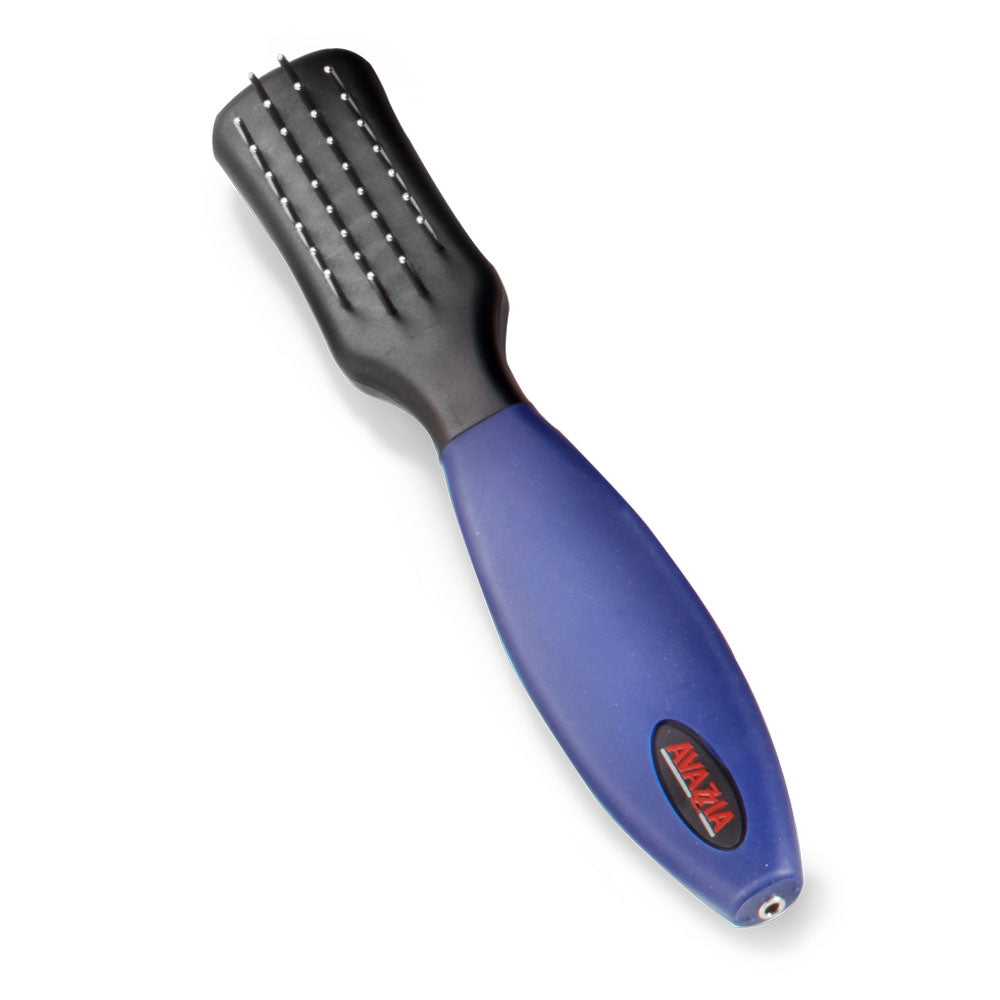
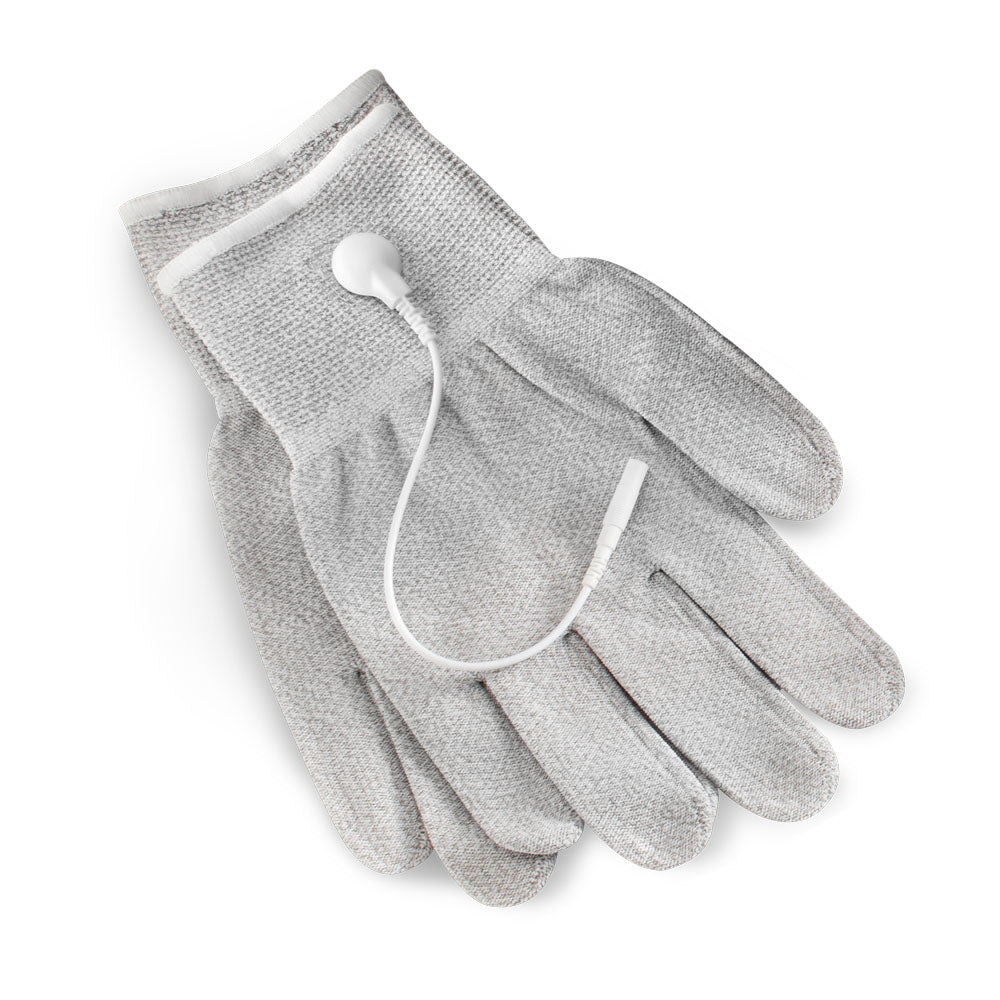
This is where treating an animal becomes a little different from treating yourself.
Hair gets in the way.
Good contact matters when delivering microcurrent, which is why certain accessories can be particularly useful when working with dogs, cats, horses, and other animals.
The Brush Electrode has traditionally been one of our favorite options because it allows you to work through the coat and make contact with the area being treated. This can be especially useful for animals with thick fur or for larger animals where adhesive electrodes would be impractical.
Conductive Gloves offer another approach. When connected to a compatible Avazzia Life microcurrent device, they allow your hands to become part of the treatment application, making it easier to work gently around a joint or larger region on an animal that is comfortable being handled.
Both are accessories and require a compatible microcurrent device to provide the current.
Technique still matters. A horse, a large dog, and a small cat obviously do not present the same treatment situation, and anatomy, size, coat, temperament, health conditions, and the location of the arthritis all need to be considered.
If you’re looking for a current Avazzia Life device or compatible treatment accessories, The Sana Shop carries the equipment used throughout the Pain Free For Life community.
How the Pain Free For Life Approach Applies to Animals
Nutrition supports an appropriate body condition and provides the nutrients an animal needs to maintain muscle and overall health. Fitness keeps the body moving at a level the animal can tolerate and helps preserve strength and mobility. Stress reduction matters because persistent pain can affect behavior, rest, handling, and willingness to participate in normal activities.
Sleep and restorative rest give an arthritic animal opportunities to recover between periods of activity, which is why a comfortable sleeping area and an environment suited to the animal’s changing mobility can make a real difference.
Microcurrent therapy then becomes another layer of support rather than something expected to do everything on its own.
The specifics will be different for every animal, but the larger principle remains familiar: look at the whole picture and support the areas that are actually contributing to the problem.
Learn How to Use Microcurrent With Your Animals
If you want to move beyond a general introduction and learn how microcurrent can actually be used with animals, Pain Free For Life now has a resource that did not exist when this article was first published.
In the Microcurrent for Pet Health Lab, Dr. Rob Vanbergen, DNM, PhD, teaches practical applications of microcurrent and other energy-medicine tools for dogs, cats, horses, livestock, and other animals.
The training extends beyond arthritis to explore animal injuries, mobility concerns, stress and anxiety, meridian work, and other health challenges, along with approaches involving microcurrent, PEMF, light therapy, and scalar technologies.
If you already own an Avazzia Life device, the Lab can help you understand how to use the equipment you have more confidently with your animals. If you are new to microcurrent, it also provides a foundation for understanding how animal treatments differ from the ways you may have seen the technology used with people.
Helping an Arthritic Animal Keep Doing What They Love
One of the hardest parts of watching an animal develop arthritis is seeing the little pieces of their normal life begin disappearing along with their mobility.
The dog who used to race toward the leash begins watching from the bed. The cat who always slept in the sunny window stops making the jump. A horse who once moved eagerly begins approaching familiar work with hesitation.
Those changes matter because quality of life is about more than whether an animal can technically stand, eat, and sleep. It includes movement, curiosity, interaction, comfort, play, and the ability to participate in the routines that have always made that animal themselves.
Osteoarthritis is a chronic condition, and we cannot promise to make an aging or damaged joint new again. What we can do is recognize pain earlier, work with a veterinarian to understand what is happening, maintain healthy body condition and muscle, adapt activity appropriately, use effective pain management, and consider supportive therapies such as microcurrent when they fit the animal’s needs.
Sometimes progress is not your older dog running as far as they did at three years old. It may be seeing them get up more comfortably when the leash comes out and still wanting to come along. For a cat, it may mean finding them back in a favorite sleeping place once you have made it easier to reach. For a horse, it may be greater comfort during the level of activity that is appropriate for that animal.
The goal is not to make an arthritic animal young again. It is to help them remain comfortable, mobile, engaged, and able to enjoy as much of their normal life as possible.
We’re Here to Help
Have questions about microcurrent therapy for animals, pet-specific treatment resources, or choosing an Avazzia Life device and accessories? Our team is here to help and will respond within 48 business hours.
Looking for microcurrent devices, the Brush Electrode, Conductive Gloves, or other treatment accessories? Shop The Sana Shop to explore the current collection.
Our Support Team is available Monday through Friday, 9:00 a.m.–5:00 p.m. Pacific.
Call: 1-888-758-0851 in North America or 415-688-2045 internationally.
Email: support@painfreeforlife.com
Text: +1 (415) 688-2045 for quick questions about current device availability, sales, and pricing.
For additional education on microcurrent therapy, pain, recovery, and whole-body wellness, visit the Pain Free Living Lab.
Sources Cited
World Small Animal Veterinary Association. 2022 WSAVA Guidelines for the Recognition, Assessment and Treatment of Pain.
https://wsava.org/global-guidelines/pain-guidelines/
Monteiro BP, et al. 2022 WSAVA Guidelines for the Recognition, Assessment and Treatment of Pain. Journal of Small Animal Practice.
https://doi.org/10.1111/jsap.13566
Merck Veterinary Manual. Osteoarthritis in Dogs and Cats.
https://www.merckvetmanual.com/musculoskeletal-system/osteoarthritis-in-dogs-and-cats/osteoarthritis-in-dogs-and-cats
American Animal Hospital Association. Pain Management: 2023 AAHA Senior Care Guidelines for Dogs and Cats.
https://www.aaha.org/resources/2023-aaha-senior-care-guidelines-for-dogs-and-cats/pain-management/
American Animal Hospital Association. Evaluating the Healthy Senior Pet.
https://www.aaha.org/resources/2023-aaha-senior-care-guidelines-for-dogs-and-cats/evaluating-the-healthy-senior-pet/
American Animal Hospital Association. How to Assess Your Senior Pet’s Quality of Life.
https://www.aaha.org/resources/how-to-assess-your-senior-pets-quality-of-life/
American Animal Hospital Association. What’s Wrong? Common Pet Pain Signs.
https://www.aaha.org/resources/whats-wrong-common-pet-pain-signs/