




What lingering tenderness, numbness, pulling, and sensitivity may tell you about a scar that looks completely healed
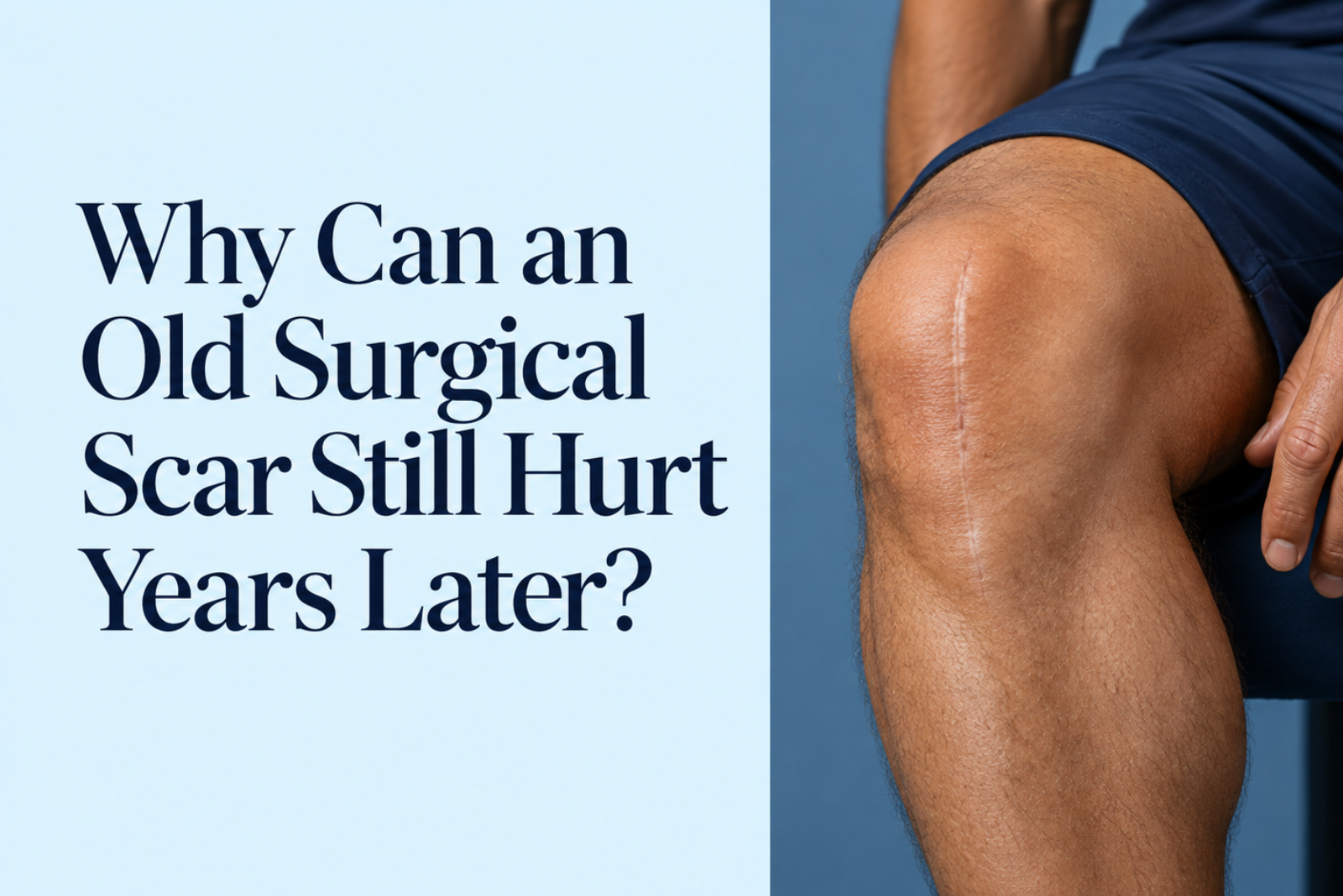
| Overview: When an Old Scar Still Bothers You
In this article, we’ll look at:
The surgery may have been five, 10, or even 20 years ago. The incision closed long ago, and from the outside, the scar may now look like little more than a pale line. Yet the area may still feel numb when you touch it, pull when you stretch, or become uncomfortable when clothing rubs against it. If the wound healed years ago, why can the scar still feel uncomfortable? Because closing an incision and returning tissue to exactly the way it was before surgery are not the same thing. A surgical incision can affect skin, connective tissue, nerves, fascia, muscle, and other structures, while the tissue created during repair isn’t identical to what was there before. For many people, a mature scar causes little or no trouble. For others, changes involving nerves, sensation, scar tissue, or movement can remain noticeable long after the surgery itself has faded into memory. |
A Closed Incision Isn’t the End of Healing
We tend to think about surgical healing in visible milestones: the incision closes, stitches or staples come out, swelling subsides, and eventually the scar begins to fade.
Underneath the surface, however, healing is more complicated. During wound repair, the body produces collagen to rebuild damaged tissue. Over time, that newly formed tissue remodels and becomes stronger, but scar tissue remains structurally different from normal, uninjured tissue.
Surgery can also affect structures below the skin. Depending on the procedure, an incision may pass through multiple tissue layers, and nearby nerves can be stretched, irritated, compressed, or cut.
That helps explain why two scars that look very similar from the outside can feel completely different. One may eventually become barely noticeable, while another remains numb, tight, tender, itchy, tingly, or sensitive years later.
A scar’s appearance tells us something about healing. It doesn’t necessarily tell us everything about what happened underneath it.
Why Can an Old Scar Still Hurt?
No single explanation fits every painful surgical scar. Several changes can contribute, and sometimes more than one happens at the same time.
Nerves Can Be Affected During Surgery
Small sensory nerves travel throughout the skin and underlying tissues. A surgical incision can cut, stretch, compress, or irritate some of those nerves.
As nerves recover, sensation may change. Some areas become numb or less sensitive, while others develop tingling, burning, itching, tenderness, or heightened sensitivity to touch.
Occasionally, an injured nerve can also develop a neuroma, an area of disorganized nerve growth that may become painful. That means a scar that looks completely healed can still be associated with altered nerve sensation long afterward.
Scar Tissue Is Different From the Tissue It Replaced
Scar formation is the body’s solution to an injury that needs repair. Collagen is laid down to restore strength to the damaged area, but scar tissue’s organization and properties differ from normal tissue.
A mature scar may therefore feel firmer, thicker, tighter, less flexible, or simply different from the tissue around it. The amount and character of scar tissue can also vary considerably from one person—and one surgery—to another.
Adhesions Can Affect Deeper Tissue
Not every post-surgical problem is located in the visible scar.
Following some operations, adhesions can form internally when bands of scar-like tissue develop between tissues or organs that would normally move more freely against one another. Many adhesions cause no symptoms at all, while others can contribute to discomfort or complications depending on their location and severity.
A pulling sensation near a scar does not automatically mean you have an adhesion, and an external scar cannot tell you exactly what is happening internally. Persistent or significant symptoms need appropriate evaluation rather than self-diagnosis.
Movement Can Change During Recovery
Pain changes the way we move.
After abdominal surgery, you may temporarily protect your midsection when standing or walking. Following knee or hip surgery, you may shift weight away from one side. After breast or shoulder surgery, reaching overhead may initially feel uncomfortable.
These adaptations can help while your body heals. But if altered movement continues, surrounding muscles and joints may begin doing their jobs differently.
Years later, the scar itself may be only one part of the picture.
What Can an Old Scar Feel Like?
An old scar doesn’t have to be dramatically painful to remain noticeable. You might experience:
- Numbness or reduced sensation
- Tenderness when the area is pressed
- Tingling, burning, itching, or other unusual sensations
- Sensitivity to clothing or light touch
- Tightness or pulling with movement
- Firm or less flexible tissue
- Discomfort when stretching
- Pain around or near the surgical site
- A noticeable difference between the scar and surrounding tissue
These sensations can provide useful information, but they don’t tell us the cause on their own. Numbness may involve nerve injury, while pulling with movement could involve scar tissue, deeper structures, or another musculoskeletal issue entirely. Pain near an old incision could also have nothing to do with the scar.
When Should an Old Scar Be Evaluated?
A scar that has looked and felt essentially the same for years is different from one that suddenly changes.
Talk with your healthcare provider if you notice new or increasing pain, swelling, warmth, redness, drainage, skin breakdown, a new lump or mass, significant changes in appearance, or another unexplained change around a previous surgical site.
Persistent pain, numbness, weakness, or changes in movement may also warrant evaluation, especially if they interfere with everyday activities.
If you have a history of cancer surgery, new changes around the breast, chest, lymph nodes, or surgical area should not automatically be attributed to old scar tissue. Our Breast Health: What Every Woman Should Know guide explains why new breast and surgical-area changes deserve appropriate evaluation rather than assumptions about their cause.
C-Section Scars
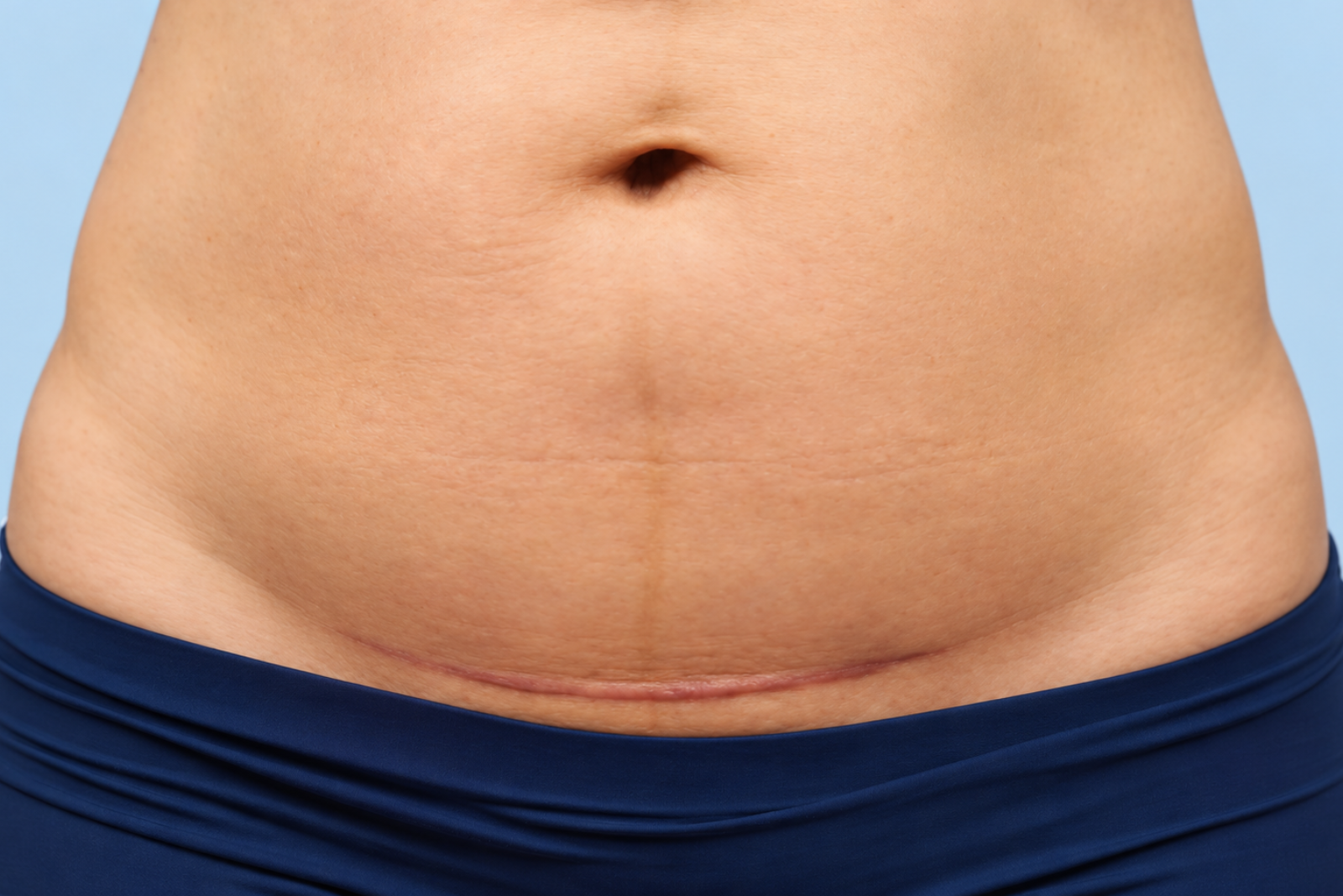
When people hear “scar treatment,” they often picture a visible scar on the skin. But surgical history can include many different kinds of incisions and procedures, including:
- C-sections
- Mastectomies and other breast surgeries
- Joint replacements
- Abdominal surgeries
- Gallbladder or appendix surgery
- Spinal surgery
- Orthopedic procedures
- Other healed surgical incisions
A C-section is an especially useful example because the incision may have healed decades earlier while remaining part of a woman’s abdominal and pelvic history.
Our guide to microcurrent for C-section scars looks specifically at C-section scar tissue and the Pain Free For Life approach to working with it.
Scar tissue can also be particularly relevant when we’re looking at women’s health more broadly. Women’s Health Across Life Stages explores the relationships among hormones, fascia, stress, nervous-system regulation, and previous scars throughout different stages of a woman’s life.
Time doesn’t erase the fact that tissue was once injured and repaired.
What If Your Scar Doesn’t Hurt?

An old, fully healed scar may still be considered for scar neutralization even if it has never caused pain or limited movement. At Pain Free For Life, we consider scar tissue potentially relevant to electrical conductivity in the area, while symptoms such as numbness, pulling, tenderness, or sensitivity provide additional information about how the scar and surrounding tissues are functioning.
This doesn’t mean every old scar causes a health problem somewhere else in the body. It does mean that previous surgeries and healed scars remain part of the health history we consider when looking at chronic pain and developing a microcurrent treatment plan.
If a scar does remain numb, tight, tender, sensitive, uncomfortable, or restricted with movement, those details are worth noting rather than dismissing simply because the surgery happened years ago.
Where Microcurrent May Fit
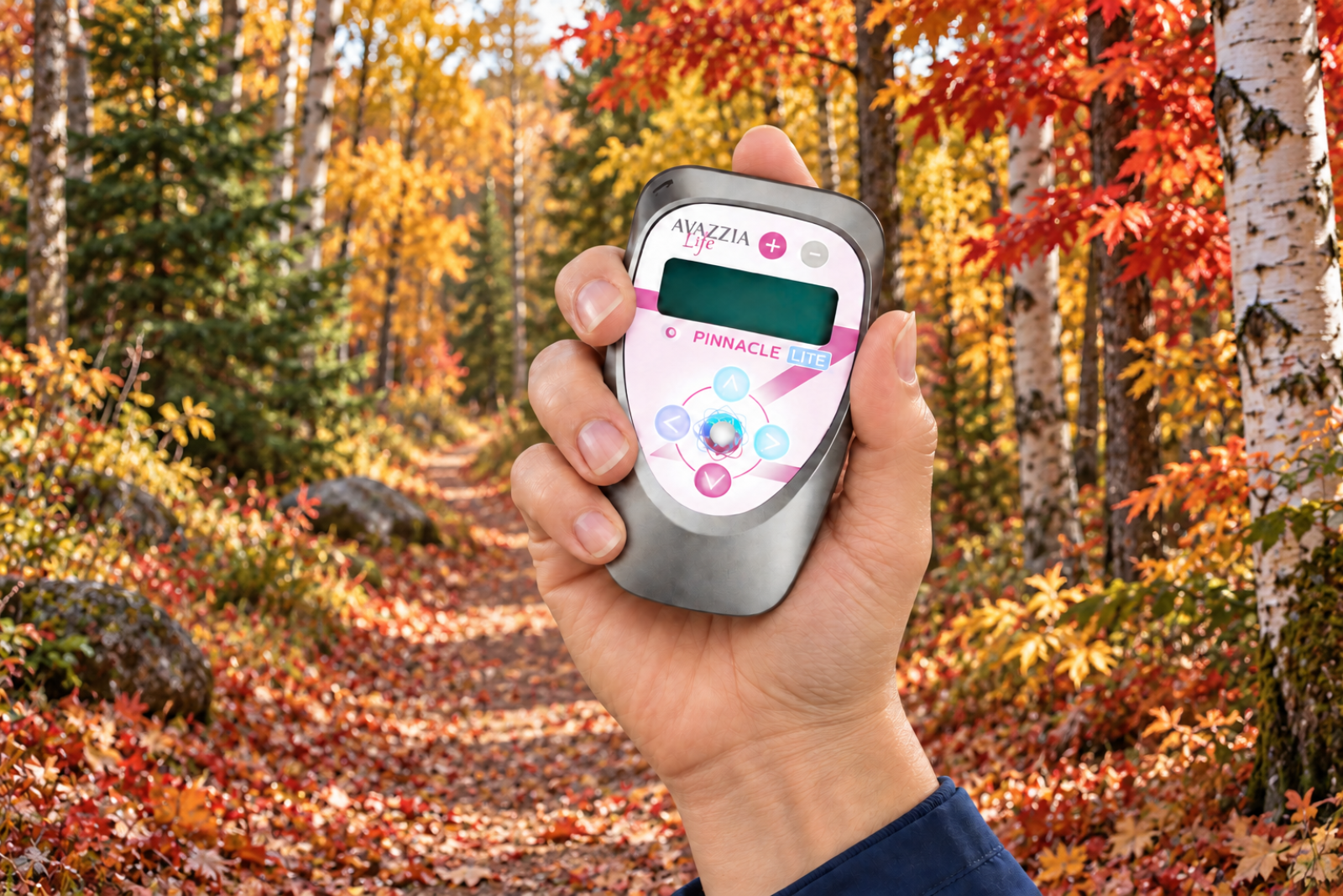
Once a surgical incision has fully healed and appropriate medical care is complete, microcurrent may be an option for working with a mature scar and the surrounding tissue.
Within Pain Free For Life microcurrent protocols, we use 77 Hz for healed scars and surrounding soft tissue, with the goal of neutralizing the scar and improving conductivity in the area.
This is different from treating an open or newly healing surgical wound. The focus here is mature, fully healed scar tissue.
Already familiar with microcurrent but unsure which device best matches the treatments you want to perform? Our Pain Free For Life Avazzia Life Device Guide compares the current devices, their features, and where each may fit.
What Does Scar Neutralization Actually Mean?
At Pain Free For Life, scar neutralization refers to a microcurrent protocol used on fully healed scar tissue and the surrounding area. Treatment may involve working directly along and around the mature scar with a compatible Avazzia Life device, following the protocol for that device and treatment area.
The goal isn’t cosmetic scar removal, and “neutralizing” a scar doesn’t mean making the tissue disappear. The scar remains part of the body’s physical history. The protocol is intended to work with the healed tissue and electrical conductivity in and around the area.
Our Microcurrent Therapy for Scar Healing guide goes much deeper into the Pain Free For Life approach to scar treatment.
If you’re using an Avazzia Life device, follow the current protocol appropriate for your device and treatment area. If Treatment Coordinator support is included with your eligible membership, your coordinator can also help you understand how scar neutralization may fit into your individual treatment plan.
Want to know more about the people behind that guidance? Behind the Scenes at Pain Free For Life: Small Team. Big Results. Introduces the Treatment Coordinators and support team who help clients navigate their microcurrent education and protocols.
Your Scar Is Part of Your Health History

We tend to think of surgery as an event with a clear beginning and end. The procedure happens, the incision closes, the scar fades, and life moves forward. Most of the time, that’s exactly what we want.
But a scar doesn’t disappear from your body’s history simply because years have passed. If an old surgical area remains numb, tender, tight, sensitive, or uncomfortable—or seems to affect the way you move—it is worth including that information when you talk with your healthcare provider or develop a broader pain-resolution plan.
Sometimes an old scar really is just an old scar. Sometimes it still has something useful to tell us.
We’re Here to Help
Have questions about scar neutralization, microcurrent therapy, or using an Avazzia Life device with a fully healed surgical scar? Our team is here to help and will respond within 48 business hours.
Call: 1-888-758-0851 in North America or 415-688-2045 internationally
Email: support@painfreeforlife.com
Text: +1 (415) 688-2045
For more education on microcurrent therapy, chronic pain, scar treatment, and whole-body recovery, visit the Pain Free Living Lab.
You can also visit The Sana Shop to explore Avazzia Life microcurrent devices, conductive accessories, and other wellness tools.
Sources Cited:
Cleveland Clinic. Scar Tissue Pain: What It Is, Causes & Treatment.
https://my.clevelandclinic.org/health/diseases/11030-scars
Cleveland Clinic. Abdominal Adhesions.
https://my.clevelandclinic.org/health/diseases/15254-abdominal-adhesions
Johns Hopkins Medicine. Scars.
https://www.hopkinsmedicine.org/health/conditions-and-diseases/scars
MedlinePlus. Scars.
https://medlineplus.gov/scars.html