




| Overview: Microcurrent Therapy for Eyes
When your eyes start feeling worn out sooner than they used to, it’s easy to brush it off at first. Maybe screens feel harsher, or things look a little blurrier by the end of the day. These changes usually don’t show up overnight. They tend to creep in slowly until ordinary parts of life require more effort than they should. At Pain Free For Life, we view eye health the same way we approach healing more broadly: through the lens of whole-body support via The Hache Protocol™. Rather than focusing only on symptoms, we ask what the eyes may need to function well and remain better supported over time. In this article, we’ll look at:
|
Why eye health gets overlooked until it starts affecting daily life
Your eyes do so much for you that it is easy to forget how much they are asked to handle until something begins to feel off.
They help you read, drive, work, recognize faces, move safely through the world, and make sense of the details that shape everyday life. Because vision is tied to so many ordinary routines, even subtle changes in eye health can affect comfort, energy, focus, and confidence more than people often expect.
The challenge is that eye concerns do not always begin dramatically. More often, they build gradually. Your eyes may feel more tired in the evening. Screens may become harder to tolerate. Dryness, irritation, blur, or a sense of strain may start showing up more often. In some cases, those changes are simply signs that the eyes are under more stress. In others, they may point to a deeper pattern involving circulation, inflammation, aging, or reduced resilience in the tissues involved in vision.
What affects the rest of the body often affects the eyes too. They rely on circulation, nutrients, hydration, and healthy cellular communication just as other tissues do. That is one reason eye health deserves more attention now, not later.
Why modern life is harder on the eyes than many people realize
Today’s eyes are asked to do a great deal.
Many people spend long hours looking at computers, phones, tablets, and televisions. Add in artificial lighting, dry indoor air, environmental stress, aging, inflammation, poor sleep, and long workdays, and it becomes easier to understand why the eyes can begin to feel overworked.
Sometimes that strain stays in the background. Other times, it starts to shape how you move through the day. Reading may feel more tiring. Driving may take more effort. Visual focus may feel less sharp. Your eyes may burn, water, ache, or feel unusually tired by evening.
These experiences are common, but they should not be brushed aside. The eyes are living tissue. They need circulation, nourishment, hydration, and healthy cellular function, just like the rest of the body.
If we want to support the eyes more intelligently, it helps to look beyond surface symptoms and pay attention to what helps tissues stay nourished, resilient, and able to recover.
The Trinity of Eye Health
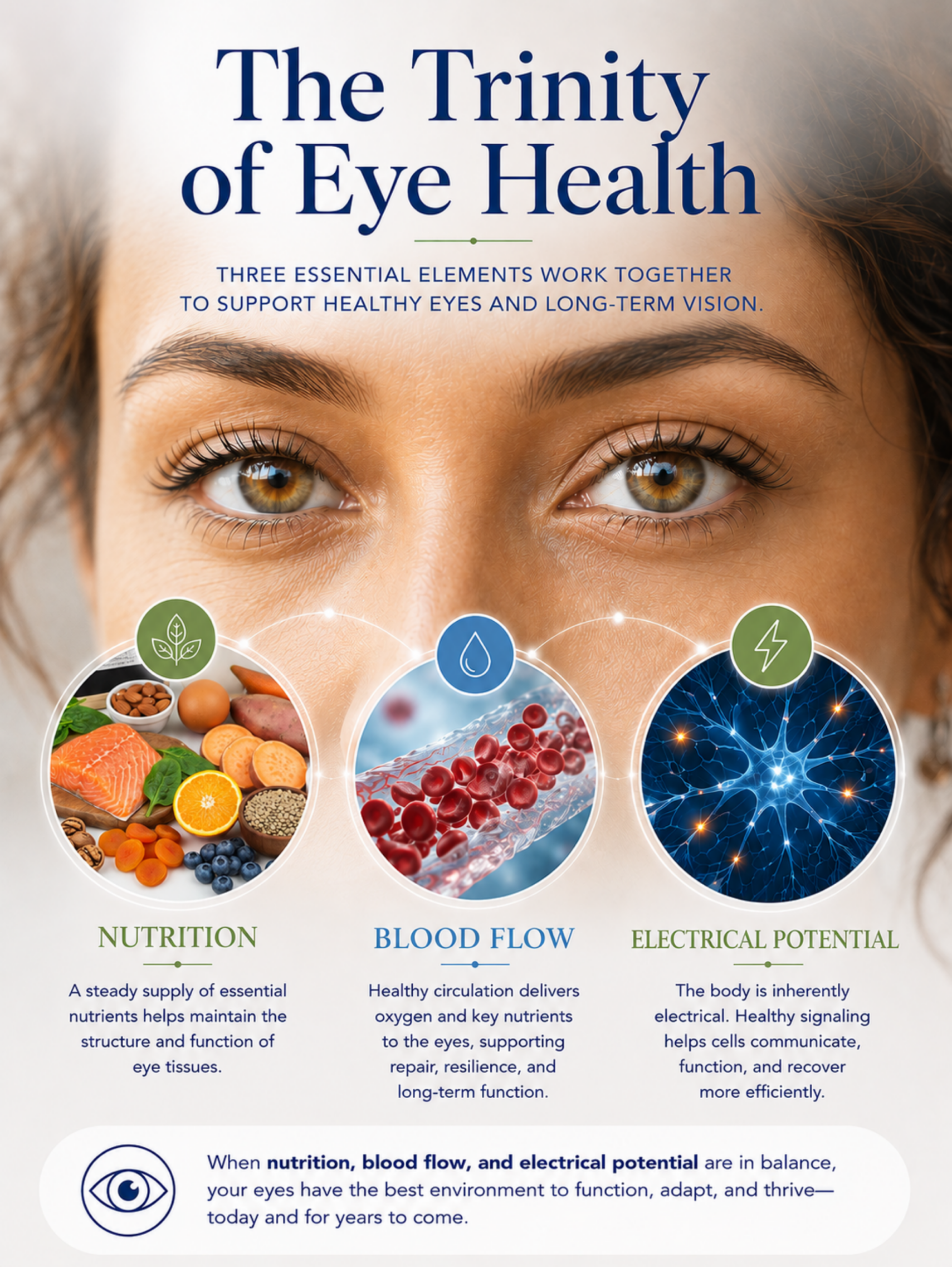
One of the clearest ways to understand this topic is through what we call the Trinity of Eye Health:
- Nutrition
- Blood flow
- Electrical potential
This framework matters because it moves the conversation away from a narrow, one-dimensional view of eye concerns.
Nutrition: The eyes require a steady supply of supportive nutrients to maintain their structure and function over time. If the body is depleted, inflamed, or undernourished, the eyes may feel that burden too.
Blood flow: Circulation matters because it helps deliver oxygen and key nutrients while supporting tissue repair and resilience. Reduced circulation does not just affect comfort. It can affect how well tissues are maintained over time.
Electrical potential: The body is electrical by nature. When healthy signaling is disrupted, tissues may not function or recover as efficiently as they could. This is one reason why microcurrent has become such an important part of the conversation.
Taken together, these three elements offer a more complete picture of what eye support can look like.
Why are more people paying attention to microcurrent?
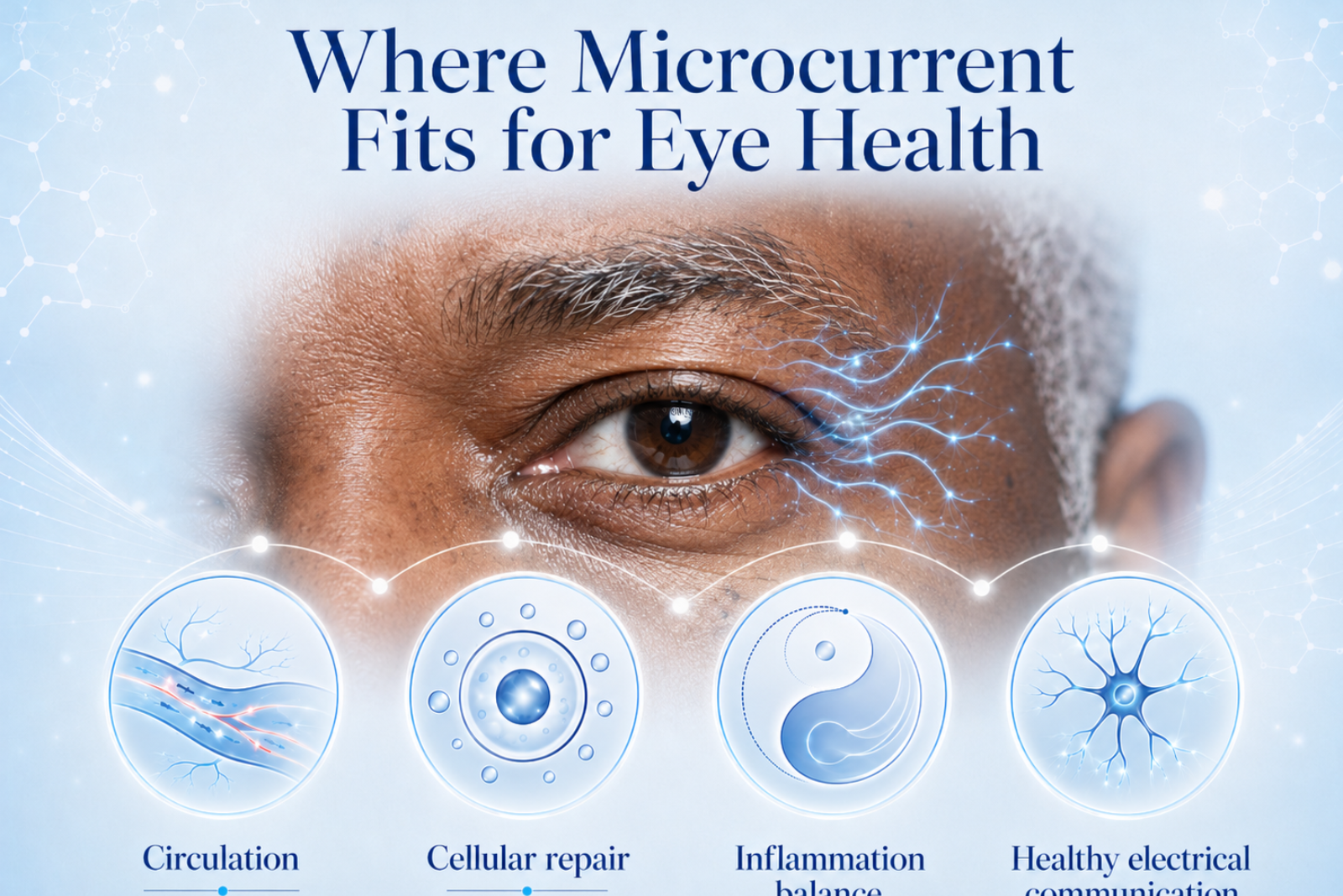
One reason microcurrent continues to draw interest is that it offers a gentle, non-invasive way to support the body. Microcurrent uses very low-level electrical signals designed to work with the body’s own communication systems.
Within the eye-health conversation, microcurrent is often discussed in relation to supporting:
- Circulation
- Cellular repair
- Inflammation balance
- Healthy electrical communication
That does not mean it is a magic fix, nor does it replace appropriate medical care. What it can offer is another layer of support for people who want to care for their eyes in a more proactive and comprehensive way.
If you want a deeper look at how we think about this, you can also explore: How Our Microcurrent Goggles Can Help Combat Eye Disease.
Why is this conversation growing in 2026?
Interest in this topic has grown well beyond our own ecosystem. Forbes explored the subject in an article looking at whether microcurrent might help slow down macular degeneration, which reflects the wider curiosity building around this approach:
If you want to hear Dr. Rob talk through how and why microcurrent may support the eyes, including his own vision health story, watch the video below:
For many people, the question is no longer whether eye strain and visual fatigue are common. It is whether there are better ways to support the eyes before those issues become harder to ignore.
What makes Microcurrent Goggles part of this conversation
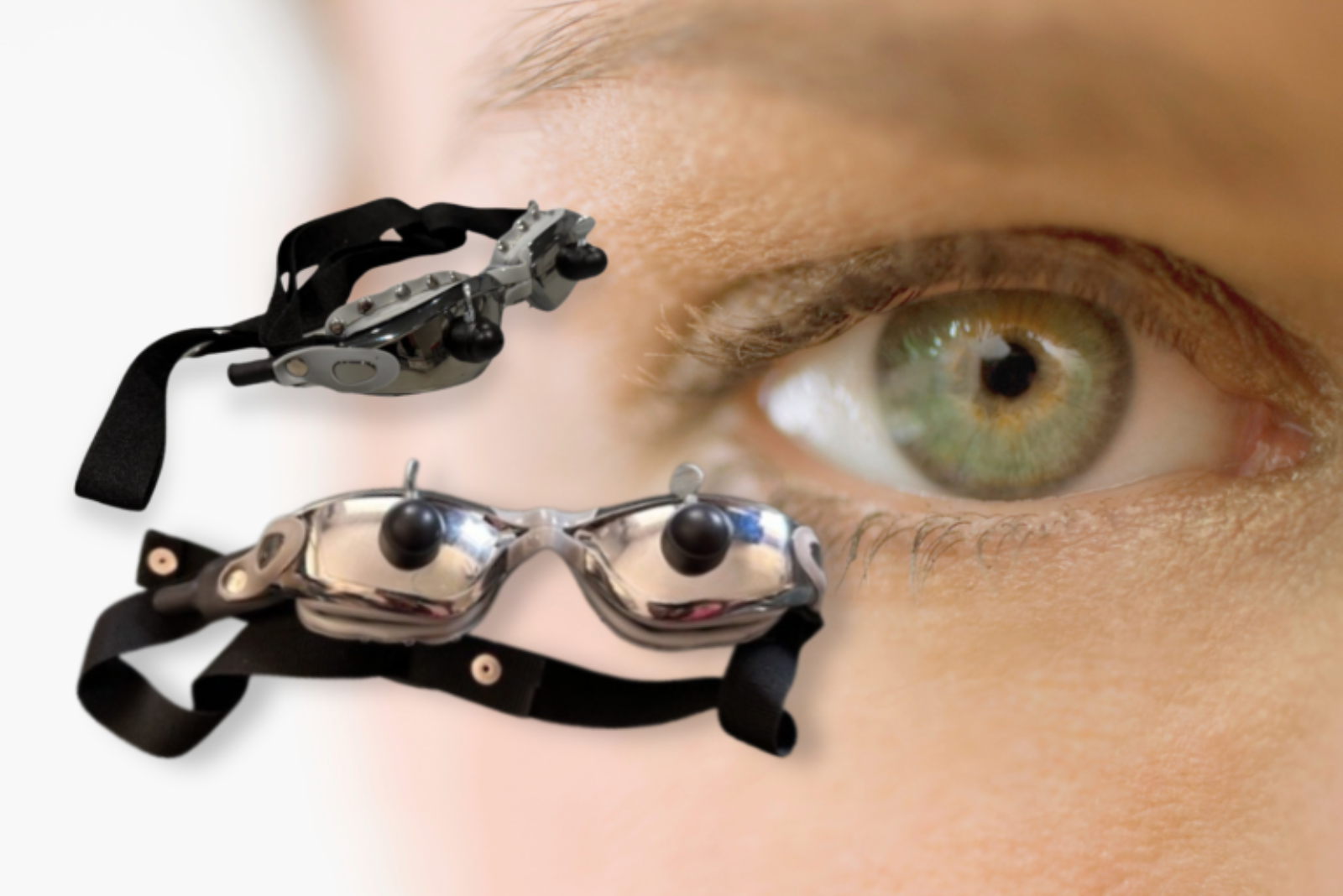
This is one reason Microcurrent Goggles have become such an important part of the eye-health discussion. They are designed to make eye-focused microcurrent support more precise, more comfortable, and easier to use consistently.
That matters because the best support is often the kind people can actually use regularly. The goggles help bring the conversation out of theory and into something more practical.
*Note: To power Microcurrent Goggles, you will need a compatible Avazzia Life device.
Frequently Asked Questions
What is microcurrent therapy for eyes?
Microcurrent therapy for eyes refers to the use of very low-level electrical signals to support circulation, tissue repair, inflammation balance, and healthy electrical communication in the tissues involved in vision.
Can microcurrent therapy for eyes support eye health?
Microcurrent may offer another layer of support for eye health by helping support blood flow, cellular repair, and electrical potential. It is not a replacement for medical care, but it can be part of a broader, more proactive approach.
How does microcurrent therapy for eyes work?
Microcurrent is designed to work with the body’s own communication systems. In the context of eye support, it is often discussed in relation to circulation, tissue nourishment, inflammation balance, and the body’s natural repair processes.
What is the Trinity of Eye Health?
The Trinity of Eye Health is the framework we use to explain eye support through three key pillars: nutrition, blood flow, and electrical potential.
Can circulation affect eye health?
Yes. Circulation plays a major role in delivering oxygen and nutrients to the tissues involved in vision. When circulation is less efficient, comfort and tissue support may also be affected.
What causes eye strain and tired eyes?
Eye strain and tired eyes can be influenced by screen use, inflammation, dry indoor air, poor sleep, aging, visual overload, and broader stress in the body.
Is microcurrent safe for eyes?
In general, yes, microcurrent therapy is considered safe around the eyes when used appropriately. If you want a deeper explanation of how we think about safety, eye-specific use, and the role of circulation and electrical potential, you can read more here: Is Microcurrent Therapy Safe Around the Eyes?
Are Microcurrent Goggles a safe eye microcurrent device for home use?
Our Microcurrent Goggles are designed for home use and ease of application. As with any wellness tool, it is important to use them as directed and to seek appropriate professional guidance when needed, especially for more serious eye concerns.
*Note: Microcurrent goggles work with a compatible Avazzia Life microcurrent device, which powers the treatment.
Where can I learn more about microcurrent for eyes?
If you want to go deeper, The Ultimate Microcurrent Eye Health Lab was created for exactly that purpose. It offers a more focused look at vision physiology, degeneration, and the layered strategies that may help support healthier eye function over time.