





Chronic pain has a way of making people hesitant to hope.
After countless appointments, injections, therapies, and half-solutions, even the most promising tool can feel like just another experiment. That’s why real case studies are so powerful—they reveal what microcurrent therapy achieves in practice, not as a theory, but in the transformative moments when a body begins to heal.
In the powerful interview that inspired this blog, Dr. Rob Vanbergen sits down with Sandy Barrett, a kinesiologist and holistic practitioner, to discuss clients who faced long-standing pain, limited mobility, and complex health challenges, and the remarkable outcomes they achieved.
Watch the full interview with Dr. Rob Vanbergen and practitioner Sandy below.
| Overview: microcurrent therapy for pain and whole-body healing
Microcurrent therapy uses gentle, low-level electrical currents to support the body’s natural communication systems. In this interview, Sandy shares how he combines microcurrent therapy with kinesiology, meridian energy analysis, vagus nerve stimulation, scar tissue protocols, and at-home device support to help clients with chronic pain and complex health patterns. Rather than focusing on symptoms in isolation, the conversation shows how pain, mobility, nervous system regulation, scar tissue, old trauma, and energetic imbalances can all influence one another. Key ideas to keep in mind:
|
Does microcurrent therapy really work for pain?
One of the first questions people ask is simple: does microcurrent therapy really work for pain?
The more honest answer is that results can vary, especially when pain has been present for months or years. But Sandy’s case studies show how microcurrent treatment for pain may support meaningful changes when treatment is targeted, paced appropriately, and combined with a whole-body view.
Pain is not always just a muscle problem or a joint problem. It can involve nerves, scar tissue, compensatory patterns, stress, circulation, old injuries, and the body’s ability to move out of a protective state. For a plain-language introduction, read our guide on microcurrent pain therapy for chronic pain relief.
For a deeper foundation, listen to Episode 121 of the Pain Free For Life podcast, Microcurrent 101: What Makes It Work, where Dr. Rob explains the basics of microcurrent therapy and why it can be so powerful for whole-body healing.
Meet Sandy Barrett: kinesiology, meridian energy, and microcurrent therapy.
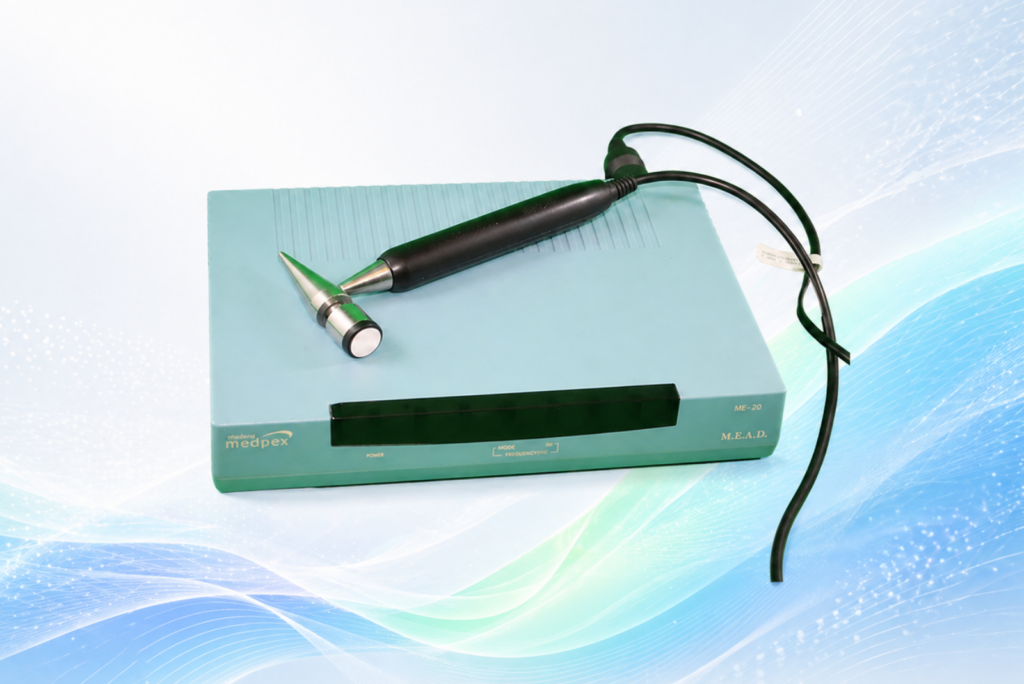
Sandy’s background is in kinesiology, and his practice changed significantly when he introduced the MEAD-20 System about four years ago.
The MEAD-20 System, short for Meridian Energy Analysis Device, is used to evaluate energetic patterns in the body through acupuncture and meridian points. For Sandy, it offered a faster way to assess meridian balance, metabolism, nervous system patterns, body energy, and other indicators that could help guide treatment.
Before using the MEAD-20, much of this work required more extensive muscle testing. With the MEAD scan, Sandy could gather information more quickly, compare progress over time, and personalize care based on what the body appeared to be showing.
As Sandy explained in the interview:
“It was just a game changer for doing kinesiology balancing because it was a really quick way to determine what meridians were out of balance.”
This matters because microcurrent therapy works best when it is not treated as a one-size-fits-all tool. Sandy uses the information from the MEAD scan to help determine where the body may be out of balance and which protocols may make the most sense.
Why vagus nerve stimulation is often the starting point
Throughout the interview, Sandy returned to one point again and again: the vagus nerve matters.
The vagus nerve helps regulate the parasympathetic nervous system, often described as the “rest and digest” state. When the nervous system is stuck in high alert, the body may struggle to repair, regulate inflammation, digest well, sleep deeply, or respond fully to treatment.
That is why microcurrent vagus nerve stimulation can be such an important starting point. Sandy often uses the Avazzia Life Genesis II for vagus nerve support, especially with clients doing at-home care.
When the nervous system begins to calm, the body may have a better chance of moving into the conditions needed for deeper healing.
Understanding the theory is helpful. Seeing it in practice is where it starts to click.
The following case studies offer a closer look at how microcurrent therapy is used in real-world settings, and how those small shifts can build into meaningful change over time.
Real microcurrent therapy case studies
The stories Sandy shared are memorable because they involve long-standing problems, not minor discomforts.
Frozen shoulder: restoring movement after 18 months of pain
One of Sandy’s first microcurrent success stories involved a client with a frozen shoulder. She had been receiving cortisone injections for about 18 months and still could not lift her arm above her shoulder or reach behind her back.
Sandy decided to try a short microcurrent session. He described the moment he realized something had shifted:
“At the end of the 15-minute treatment, I got her to show me what her range of movement was, and she could actually lift her hand right up and right behind her back as well.”
Two weeks later, she returned for another appointment and showed that the improvement was still there.
Multiple sclerosis: Kat’s story of sleep, mobility, and renewed possibility
One of the most powerful stories Sandy shared involved Kat, a client living with rapidly advancing multiple sclerosis symptoms.
Over the previous five years, Kat’s symptoms had affected her mobility, contributed to chronic joint pain, and led to bladder and bowel atrophy. After experiencing an anaphylactic reaction to MS medication, she chose to continue without pharmaceutical treatment. She was already working with a chiropractor, physiotherapist, and urologist, but her symptoms were still deeply affecting daily life.
When Kat was referred to Sandy, he began by looking at the body as a connected system. Her care started with extensive scar tissue work, including scarring related to previous traumatic injuries and traumatic brain injuries. From there, Sandy incorporated vagus nerve stimulation, microcurrent tongue stimulation, spinal painting with Blue Stimulation Mode, and PEMF support.
The first shift was immediate. After one session, Kat reported the deepest, most restorative sleep she had experienced in more than 20 years. Her story was also featured on page 38 of the October 2025 edition of Pain Free Living Magazine, where Sandy described her progress this way:
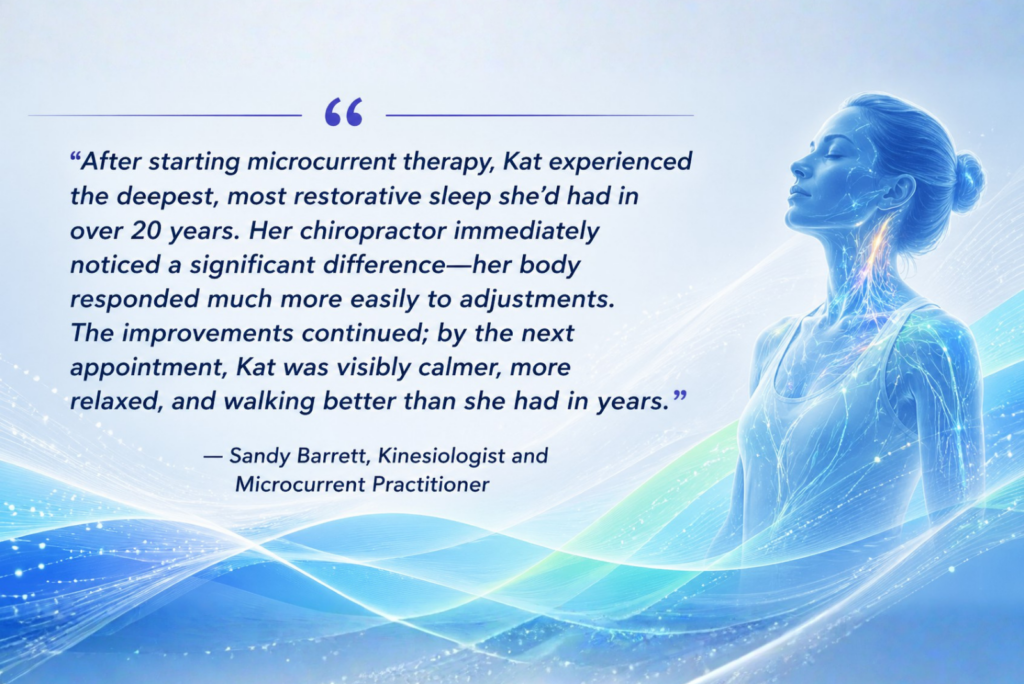
Over time, Kat continued using microcurrent therapy as part of her own self-care routine, including vagus nerve stimulation twice daily and spinal treatments weekly. Her chronic pain and inflammation improved enough that she began considering a return to work, something that had previously felt out of reach.
Perhaps the most meaningful part of Kat’s story is not only the change in symptoms, but the change in possibility. She was able to begin planning for her granddaughter’s seventh birthday celebration with more confidence, mobility, and hope.
Sciatica and stroke recovery: when nerve communication begins to shift
A gentleman was referred by his chiropractor to Sandy for severe sciatica. Sandy treated the sciatica with microcurrent, and the issue improved in one session.
After that result, the client asked whether microcurrent might help with the effects of a stroke he had experienced 13 years earlier. His left side, especially his left arm, had been significantly affected. Sandy did not promise an outcome, but they agreed to try.
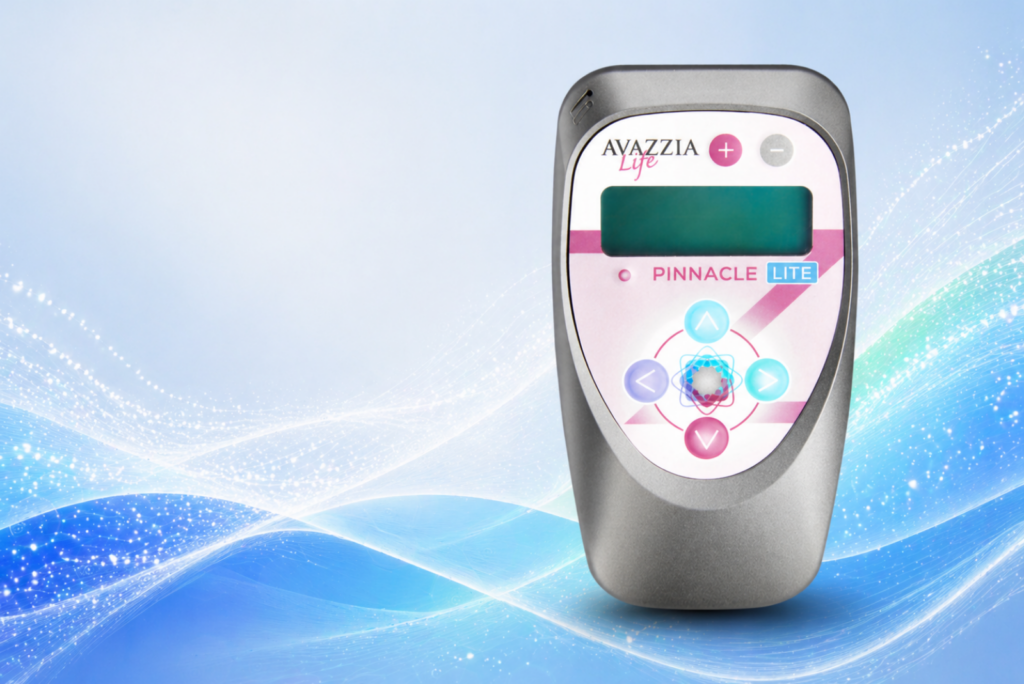
They began gently with vagus nerve work, scar therapy, spinal protocols, trigeminal points, and at-home Avazzia Life Genesis II support. Over time, his gait improved, the uncontrolled shaking in his left arm stopped, and he began using his left hand more in daily life. When Sandy later introduced the Avazzia Life Pinnacle Lite and a nerve-regeneration-focused protocol, the client was able to splay his fingers for the first time in 13 years.
This is one of the strongest examples in the interview because it shows how frequency microcurrent therapy, at-home consistency, and practitioner guidance can work together over time.
Whiplash: addressing chronic neck pain after years of symptoms

In the video above, Sandy also shared a case involving a client who had suffered whiplash from a boating accident five years earlier. Using microcurrent scar protocols on the neck, he helped clear the chronic neck pain in just a couple of treatments.
This case highlights a theme that appears throughout the interview: scar tissue and old trauma can continue influencing pain long after the original injury has passed.
What these microcurrent therapy case studies have in common
The conditions in these stories were different, but the underlying approach was similar.
Sandy was not simply chasing symptoms. He was looking for the systems that might be contributing to the pain pattern: nervous system stress, scar tissue, meridian imbalance, old trauma, inflammation, spinal communication, and the body’s ability to regulate.
Several themes appear again and again:
- Vagus nerve support was often a starting point
- Scar tissue and old trauma frequently mattered
- Meridian energy analysis helped guide decisions
- At-home microcurrent use supported consistency
- Healing unfolded in layers
- Treatment sometimes required adjustment when the body became overstimulated.
Sandy’s use of the MEAD-20 also helped him track patterns over time. Instead of relying only on how a client felt in the moment, he could compare scans, look for shifts in meridian balance, and use that information to guide the next layer of care.
How to get started with microcurrent therapy for pain
If you are new to microcurrent therapy, Sandy’s advice was straightforward: start with a device that is accessible, useful, and effective for foundational support.
For many beginners, he recommended the Avazzia Life Genesis II because of its ability to support vagus nerve treatment. For people who need more advanced options, devices like the Pinnacle Lite may offer programmable frequencies, AV mode, and more targeted protocols.
A strong starting plan may include nervous system support, simple routines before adding complexity, paying attention to the body’s response, and working with a trained practitioner or Treatment Coordinator when symptoms are complex.
Microcurrent therapy is not about forcing the body to change overnight. It is about giving the body better support so it can communicate, regulate, repair, and recover more effectively over time.