




Who we are / Insights & Information

3 Effective Natural Skin Treatments for Chronic Conditions

You take care of your body. You strive to eat a healthy diet, get regular exercise, and take supplements to ensure well-rounded nutrition. But there’s one important thing you may be overlooking when it comes to your well-being: your skin!

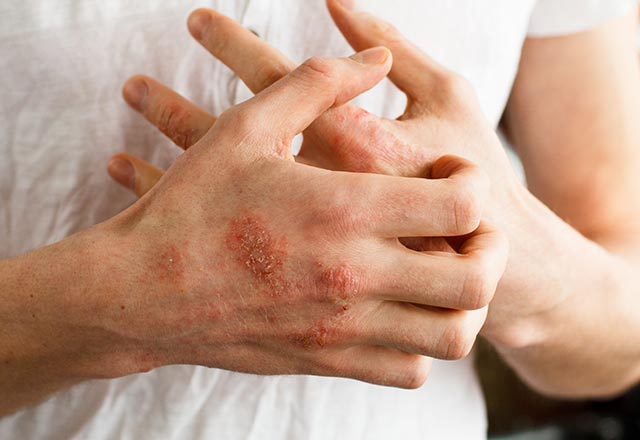
In the United States alone, it is estimated that 15 million people suffer from a skin-related ailment. Whether it be hives, eczema, psoriasis, rosacea, dermatitis, or acne, many of us can relate to the frustrating and sometimes embarrassing nature of living with a chronic skin condition. It keeps you from feeling confident and comfortable and can send you on a spiral of treatment options that result in a variety of nasty side effects.

When you suffer from a chronic skin condition such as acne, psoriasis, rosacea, or eczema, it can be increasingly difficult to seek a natural treatment. It can seem as if the only options are limited to conventional pharmaceutical tretments—which often come with a host of unpleasant and even dangerous side effects.

The Problem with Conventional Treatments for Chronic Skin Problems

Conventional medicine typically treats these issues with topical creams, pharmaceutical drugs, or injectable medications such as antihistamines, corticosteroids, and immunosuppressants. These one-size-fits-all treatments are often counterintuitive when it comes to overall health. Here are some of the main issues reported when it comes to popular conventional treatments:

Antihistamines

Antihistamines are drugs that block the action of histamine (a compound released in allergic inflammatory reactions) at the H1 receptor sites. Many people grab an antihistamine to treat an allergic reaction or uncomfortable skin condition. Constant use of this type of drug has been shown to increase the risk of developing dementia- especially when used by older adults 65 and over. Other side effects listed on antihistamine packages include confusion, dry mouth, constipation, and drowsiness.

Corticosteroids

Topical corticosteroids are a synthetic version of naturally occurring hormones produced by the adrenal glands within the body. Corticosteroid ointments, creams, lotions and gels are used to treat rash, dermatitis, eczema, and psoriasis. The cost of topical corticosteroids is quite high, even with generics. Commonly reported side effects are itching, burning, irritation, redness, and dryness. A 2019 case report has shown that long-term use of topical corticosteroids to treat chronic skin problems can trigger secondary Cushing’s syndrome in adults. Cushing’s syndrome is characterized by high blood pressure, abdominal obesity, reddish stretch marks, a round red face, a fat hump between the shoulders, weak muscles, weak bones, acne, and fragile skin that heals poorly.

Immunosuppressants

Immunosuppressants weaken the immune system to provide relief for an overactive immune system, which is present in autoimmune disorders such as psoriasis. These drugs carry a serious risk of infection. When an immunosuppressant drug weakens your immune system, your body becomes less resistant to infection overall. Those who have been prescribed this type of drug have also reported loss of appetite, nausea, vomiting, increased hair growth, and hand trembling.

Perhaps you’ve tried one or more of these methods, and either it didn’t help or you’ve run into side effects you don’t want to repeat. (Or, you simply want to avoid such side effects in the first place.) Now what?

Skin Healing Goes Far More Than Skin Deep

Living with a chronic skin condition can be frustrating, especially when something that appears on the surface may be influenced by much more than what you put on your skin.

The skin is an active organ and an important part of the body’s protective barrier. Inflammation, immune activity, environmental exposures, nutrition, stress, sleep, medications, underlying health conditions, and the products you use can all influence skin health. That is why, at Pain Free For Life, we prefer to look beyond the symptom you can see and consider the larger health picture as well.

Natural and non-invasive approaches can have a place within that picture, but chronic, persistent, or unexplained skin changes still deserve appropriate medical evaluation. Conditions that look similar can have very different causes, and the right treatment depends on what is actually happening.

3 Natural and Non-Invasive Approaches to Support Skin Health

There is no single natural treatment that works for every skin condition, but several approaches have attracted research interest and may complement an appropriate skin-care or medical treatment plan.

1. Thoughtfully Chosen Topical Ingredients

Plant-derived oils and botanical ingredients have a long history in skin care, and some are being studied for their anti-inflammatory, antioxidant, moisturizing, and skin-barrier properties.

Ingredients such as borage seed oil, chamomile, sea buckthorn oil, and tamanu oil are examples you may encounter in natural skin-care products. Evidence varies considerably by ingredient and condition, however, and “natural” does not automatically mean irritation-free or appropriate for every skin type.

For sensitive or reactive skin, simpler can often be better. Look for products that support the skin barrier without unnecessary fragrance or ingredients you already know cause irritation, and introduce new products carefully rather than changing an entire routine at once.

2. LED and Light Therapy

Light-based treatments have become increasingly common in dermatology and at-home skin care, but the wavelength matters.

Blue and red visible light have been studied for acne, while other light-based medical treatments—including phototherapy using ultraviolet wavelengths—may be prescribed by dermatologists for conditions such as psoriasis and eczema. These are not interchangeable therapies, and an at-home LED device should not be assumed to provide the same treatment as medical phototherapy.

If you are considering an at-home device, pay attention to the wavelength, intended use, manufacturer instructions, eye-protection requirements, and whether your medications or health conditions can increase sensitivity to light.

3. Microcurrent Therapy

Microcurrent takes a different approach by delivering very low levels of electrical current through the skin.

The technology has become familiar in aesthetic skin care, particularly in devices marketed for facial stimulation, tone, and appearance. Research is also exploring how low-level electrical stimulation may influence cellular activity and tissue repair, although evidence varies considerably by application.

At Pain Free For Life, we would not position microcurrent as a proven replacement for medical treatment of acne, rosacea, eczema, psoriasis, or another diagnosed skin disease. Instead, it can be considered within a broader conversation about electrical stimulation, tissue health, recovery, and the individual treatment goal.

If you are new to the technology, our plain-language guide to microcurrent therapy explains how microcurrent works, what treatment typically feels like, and where it may fit within a larger wellness routine.

Finding What Works for Your Skin

Skin health is personal. A product or treatment that works beautifully for one person may irritate another person’s skin or simply do very little.

If something you tried did not help, that does not necessarily mean you need to keep adding more products or jumping from one treatment to the next. Sometimes the more useful next step is identifying what may be contributing, simplifying the routine, and choosing treatments based on the condition you are actually trying to address.

The Pain Free For Life approach also encourages us to look beyond a single treatment. Nutrition, restorative sleep, stress reduction, appropriate movement, and microcurrent can each occupy different places within a larger wellness routine.

If you’re looking for microcurrent devices, conductive accessories, or other wellness tools used throughout the Pain Free For Life community, you can shop The Sana Shop and have your order shipped directly to you.

We’re Here to Help

Have questions about a product, your treatment routine, or an Avazzia Life microcurrent device? Our team is here to help and will respond within 48 business hours. Call 1-888-758-0851 in North America or 415-688-2045 internationally, or email support@painfreeforlife.com.


Subscribe or share

Don’t forget to Share

WANT MORE LIKE THIS?

Subscribe to our blog for exclusive access to insights you won’t find anywhere else! Don’t miss out on expert advice and the latest in chronic pain relief.

 
Scroll to Top