




A practical guide to breast changes, screening, individual risk, and knowing when to seek care

| Overview: Your Breast Health at a Glance
In this article, we’ll look at:
Every October, pink ribbons bring breast cancer back into focus. But Breast Cancer Awareness Month is most helpful when awareness prompts action: scheduling a screening you’ve been putting off, asking whether your family history changes your risk, or mentioning a breast change rather than waiting to see whether it disappears. Breast health begins with knowing your body and receiving appropriate medical care. If cancer does occur, caring for your health can also include nourishment, sleep, movement, strength, emotional well-being, pain, and recovery. Women’s health changes considerably across life stages, from the reproductive years through perimenopause, menopause, and beyond. Our Women’s Health Across Life Stages guide takes a broader look at hormones, stress, fascia, pain, nervous-system regulation, and whole-body health through those transitions. |
Know What’s Normal for You
Breasts naturally change throughout life. The menstrual cycle, pregnancy, breastfeeding, perimenopause, menopause, weight changes, aging, medications, and other factors can all influence how breast tissue looks and feels.
That is why breast awareness isn’t about memorizing exactly how your breasts look or feel on one particular day. It is about becoming familiar enough with your body to recognize when something is new, persistent, or noticeably different for you.
A lump may be the breast change most people associate with cancer, but it isn’t the only change worth mentioning to a healthcare provider.
Pay attention to:
- A new lump or area of thickening in the breast or underarm
- A noticeable change in breast size or shape
- Dimpling, puckering, or other changes in the skin
- A nipple that changes position or becomes newly inverted
- Nipple discharge that is new or unexplained
- Swelling, redness, or thickening
- A persistent change that simply looks or feels different from what is normal for you
Most breast changes are not cancer, which is reassuring. But you can’t make that determination yourself.
Some Breast Changes Can’t Be Felt
Knowing your body matters, but breast cancer does not always produce something you can see or feel. That is why appropriate screening remains such an important part of breast health.
Mammography can identify some breast cancers before symptoms develop, when earlier diagnosis and treatment may improve outcomes. But no single screening schedule fits every woman.
Age is part of the conversation, but so are family history, breast density, previous breast conditions, genetic risk, personal medical history, and other individual factors. Depending on your risk, your healthcare provider may recommend starting screening earlier, screening more often, or adding another imaging test.
Instead of asking only, “When should I get a mammogram?”, consider asking:
“What is my individual breast cancer risk, and does anything about my history change the screening that’s appropriate for me?”
Breast awareness belongs alongside screening, not in place of it. Paying attention to your own body provides one kind of information, while mammography, clinical evaluation, and other appropriate imaging may identify concerns you could never detect by touch alone.
What About Thermography, Ultrasound, and MRI?
Some women are interested in breast-imaging options such as thermography, particularly if they have concerns about mammography or want additional ways to monitor their breast health. Thermography uses infrared imaging to detect patterns of heat and blood flow near the skin’s surface and does not involve radiation or breast compression.
Thermography, however, is not considered a replacement for mammography for breast cancer screening. Different imaging technologies provide different kinds of information, and that distinction matters when the purpose is detecting cancer.
Depending on your individual needs, a healthcare provider may also recommend ultrasound or MRI. Symptoms, breast density, personal and family history, previous findings, and other risk factors can influence which imaging type is appropriate. Each provides different information, which is why breast imaging is best considered as an individualized plan rather than a choice between interchangeable tests.
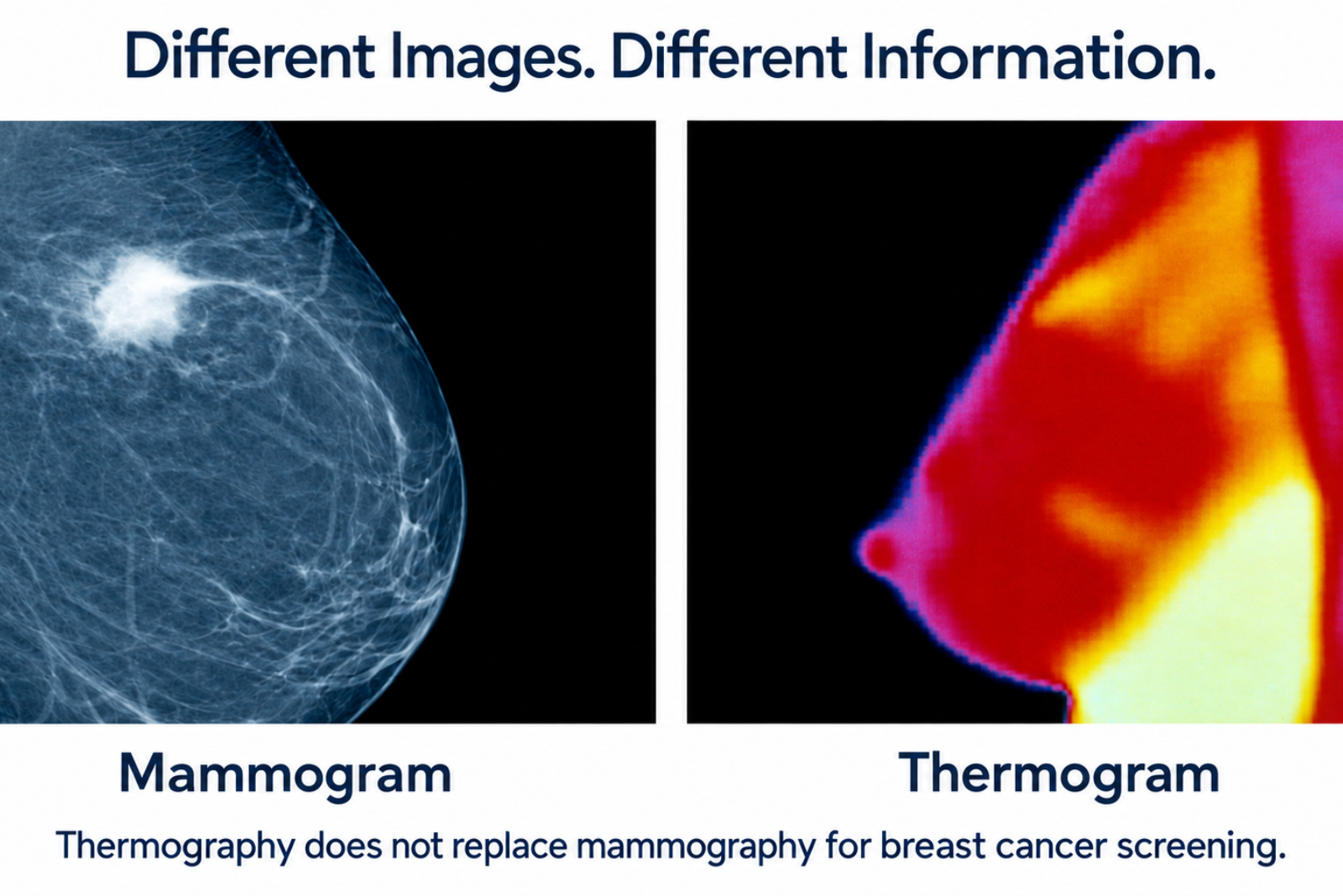
If you find mammography uncomfortable, have concerns about screening, or want to explore other imaging options, talk with your healthcare provider about your individual risk and which approach makes the most sense for you.
Men Need Breast Awareness, Too
Although Breast Cancer Awareness Month understandably places much of the attention on women, breast cancer is not exclusively a women’s disease.
Men have breast tissue and can develop breast cancer, too. Because male breast cancer is relatively uncommon, however, men may be less likely to consider it when something around the breast or chest changes.
A new lump or thickening in the breast or underarm, nipple discharge or other nipple changes, dimpling or skin changes, swelling, redness, or another persistent unexplained difference warrants medical evaluation. In men, breast cancer commonly presents as a painless lump or thickening, often near or behind the nipple.
Individual risk matters here as well. Age and family history can influence risk, and certain inherited genetic traits can increase a man’s likelihood of developing breast cancer.
Routine mammography is not generally recommended for men at average risk, which makes paying attention to an unfamiliar change especially useful. Men at substantially higher risk may receive different screening recommendations based on genetics, family history, and other individual factors.
Breast health may be the focus of this women’s-health feature, but breast awareness is a worthwhile conversation for men, too.
When Breast Cancer Becomes Personal
For someone who has actually heard the words “You have breast cancer,” October can feel very different.
Life may suddenly include scans, appointments, surgery, chemotherapy, radiation, medications, difficult decisions, disrupted routines, and uncertainty about what comes next. At the same time, treatment is happening to a whole person who still needs to eat, sleep, move, work, care for family, manage stress and fear, and recover between appointments.
The Role of Supportive Care
Cancer treatment can affect many of those ordinary parts of life. Fatigue may make familiar activities difficult. Surgery can leave pain, numbness, altered sensation, swelling, or scar tissue. Appetite and digestion may change, sleep can become harder, and periods of reduced activity can affect strength and mobility. Even after active treatment ends, recovery may continue much longer than the people around you realize.
This is why supportive care belongs alongside cancer treatment. Treating the disease and supporting the person living through it are related but different needs. Oncology care addresses the cancer itself, while supportive care helps someone navigate the physical, nutritional, functional, and emotional challenges that may arise along the way.
A Bigger Conversation About Women’s Health
Breast health is one important part of women’s health, but it doesn’t exist in isolation. Hormonal changes, sleep, chronic stress, previous surgeries and scars, nervous-system health, pain, and the demands of caring for other people can all shape how a woman feels at different stages of life.
In this Pain Free For Life women’s health roundtable, the conversation goes beyond any one symptom or diagnosis to explore stress and nervous-system regulation, hormonal changes, fascia and scar tissue, microcurrent, rest, and the importance of making your own health a priority. The discussion also explores why women’s needs can change through puberty, pregnancy, postpartum recovery, perimenopause, menopause, and beyond—and why supportive care needs to reflect the person rather than just one symptom.
Watch the full Women’s Health Roundtable below:
Cancer Treatment and Supportive Care Have Different Jobs

Cancer is one area where the distinction between complementary and alternative care matters enormously.
Surgery, chemotherapy, radiation, immunotherapy, targeted therapy, hormone therapy, and other oncology treatments are used to treat cancer. Microcurrent, PEMF, scalar energy, nutritional strategies, nervous-system support, and other complementary approaches should work alongside appropriate medical care, not replace it.
At Pain Free For Life, that broader conversation may include pain, post-surgical recovery, scars, lymphatic health, nutrition, movement, sleep, stress, nervous-system regulation, and maintaining as much strength and function as possible during treatment and recovery.
How microcurrent fits depends on what someone is actually experiencing. A person recovering from surgery may eventually work with a fully healed scar and surrounding tissue, while someone dealing with pain or physical recovery may need a different approach.
What About Scar Tissue?
Scar tissue can remain relevant long after an incision has closed. Our guide to microcurrent therapy for scar healing explores why Pain Free For Life pays particular attention to healed scars and the surrounding tissues.
For a broader look at recovery following an operation, Microcurrent Therapy for Post-Surgical Healing explores where microcurrent may fit after appropriate medical care and healing.
When prolonged stress, disrupted sleep, or nervous-system strain has become part of the picture, nervous-system-focused support may also be considered.
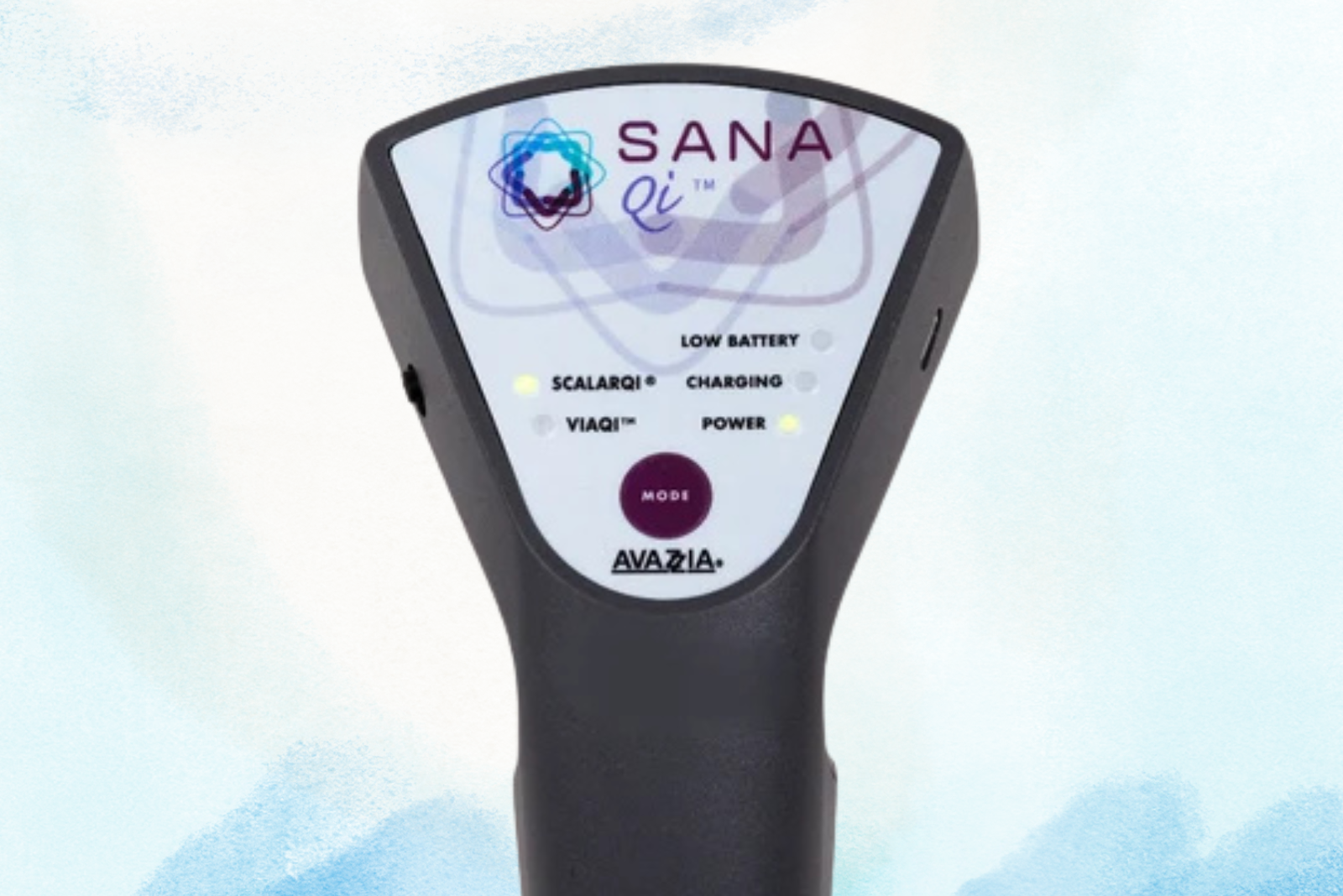
Scalar energy may also be incorporated as complementary support. Scalar treatments can be delivered using the Scalar Qi or SANA Qi accessory connected to a compatible Avazzia Life microcurrent device. Unlike a standard microcurrent treatment, scalar energy does not require electrodes to be placed directly on the skin, offering a different treatment experience that some people may find easier to incorporate during periods of treatment and recovery.
Lymphatic health can also require additional attention after some cancer treatments, particularly following lymph-node removal or radiation. Anyone who has lymphedema or an increased risk of developing it should work with appropriately trained healthcare professionals so that supportive care accounts for surgery, cancer history, current symptoms, and the oncology plan.
The same care applies to supplements, PEMF, detoxification practices, and other complementary approaches during active treatment. Your oncology team should know about any complementary therapies or supplements you are considering or using so they can coordinate your care appropriately.
Supporting the Entire Body Through Cancer Treatment

Nutrition advice can sound wonderfully simple until someone is actually going through cancer treatment.
“Eat healthy” becomes much less useful when nausea changes what you can tolerate, food tastes different, mouth sores make eating uncomfortable, appetite disappears, or fatigue makes preparing a meal feel like an unreasonable amount of work.
Nourishment needs to fit the person and the treatment. Adequate calories and protein can help maintain weight, preserve muscle, and support tissue repair, while hydration and other nutritional needs may change along the way. An oncology dietitian can be particularly valuable when eating becomes difficult or when someone is considering supplements that could interact with medications or treatment.
Movement requires similar flexibility. Staying active when possible can help preserve strength, mobility, and function, but what someone can comfortably manage during chemotherapy, radiation, or recovery from surgery may look very different from her previous exercise routine. A short walk may be plenty during one stage of treatment, while gradually rebuilding strength becomes possible later.
This is where the five interactive elements we use at Pain Free For Life—stress reduction, nutrition, fitness, sleep, and microcurrent—can provide a useful framework for thinking about whole-body support. Each addresses a different part of health and recovery without expecting any one element to do everything.
Explore the Microcurrent for Cancer Therapy Health Lab
For individuals and caregivers who want to understand this subject more deeply, Dr. Rob’s Microcurrent for Cancer Therapy Health Lab explores ways complementary care may fit alongside conventional cancer treatment.
The Lab takes a whole-body look at what someone may be experiencing during cancer care, including microcurrent, lymphatic and gentle detox strategies, targeted nutrition to support mitochondrial function and tissue repair, Vagus Nerve Stimulation for nervous-system support, and complementary technologies including PEMF and scalar energy.
Someone navigating cancer may already be carrying a substantial physical and emotional load, so supportive care needs to be thoughtful and individualized. Rather than adding more treatments to an already demanding schedule, the Lab helps participants better understand what the medical team is doing, how the body may be responding, and where additional support may appropriately fit.
The Lab is designed for people navigating cancer, as well as caregivers who want to understand better the role complementary approaches may play.
Explore the Microcurrent for Cancer Therapy Health Lab
Already purchased the Cancer Therapy Health Lab? Log in to your Pain Free Living Lab account to access your course and available materials. If you have trouble locating your Lab or accessing your purchase, email lyn@painfreeforlife.com, and our team will help.
Awareness Is Only the Beginning
Breast Cancer Awareness Month reminds us to pay attention to our bodies, understand our individual risk, and keep up with appropriate screening. If you’ve been putting off a mammogram, have questions about your family history, or have noticed an unfamiliar breast change, October is a good time to start that conversation with your healthcare provider.
For those already living with cancer, the conversation naturally becomes much larger. Treatment may address the disease, while the person going through it is also managing changes in energy, strength, sleep, nourishment, mobility, scars, emotional well-being, nervous-system health, and recovery. Those parts of health deserve attention during treatment and in the months and years that follow.
Breast health begins with awareness, but it doesn’t end there. Knowing your body, receiving appropriate medical care, and supporting your health through whatever comes next all belong in the picture.
We’re Here to Help
If you have questions about microcurrent therapy, supportive wellness approaches, Avazzia Life devices, or Pain Free For Life education, our team is here to help and will respond within 48 business hours.
Call: 1-888-758-0851 in North America or 415-688-2045 internationally
Email: support@painfreeforlife.com
Text: +1 (415) 688-2045
For additional education on microcurrent therapy, chronic pain, nervous-system health, recovery, and whole-body wellness, visit the Pain Free Living Lab.
You can also visit The Sana Shop to explore our entire line of Avazzia Life microcurrent devices, accessories, and other wellness tools.
Sources Cited:
National Breast Cancer Foundation. Breast Cancer Awareness Month.
https://www.nationalbreastcancer.org/breast-cancer-awareness-month/
National Breast Cancer Foundation. Breast Self-Exam & Breast Awareness.
https://www.nationalbreastcancer.org/breast-self-exam/
Canadian Cancer Society. Breast Cancer Screening.
https://cancer.ca/en/cancer-information/cancer-types/breast/screening
National Breast Cancer Foundation Australia.
https://nbcf.org.au/
Europa Donna — The European Breast Cancer Coalition. Breast Health Day.
https://www.europadonna.org/prevention-and-breast-health/breast-health-day/
CANSA — Cancer Association of South Africa. Cancer Risk Reduction & Screening.
https://cansa.org.za/cansas-care-support/cancer-risk-reduction-screening/
Breast Cancer Foundation Malaysia. Early Detection.
https://www.breastcancerfoundation.org.my/early-detection
U.S. Food & Drug Administration. Breast Cancer Screening: Thermogram No Substitute for Mammogram.