




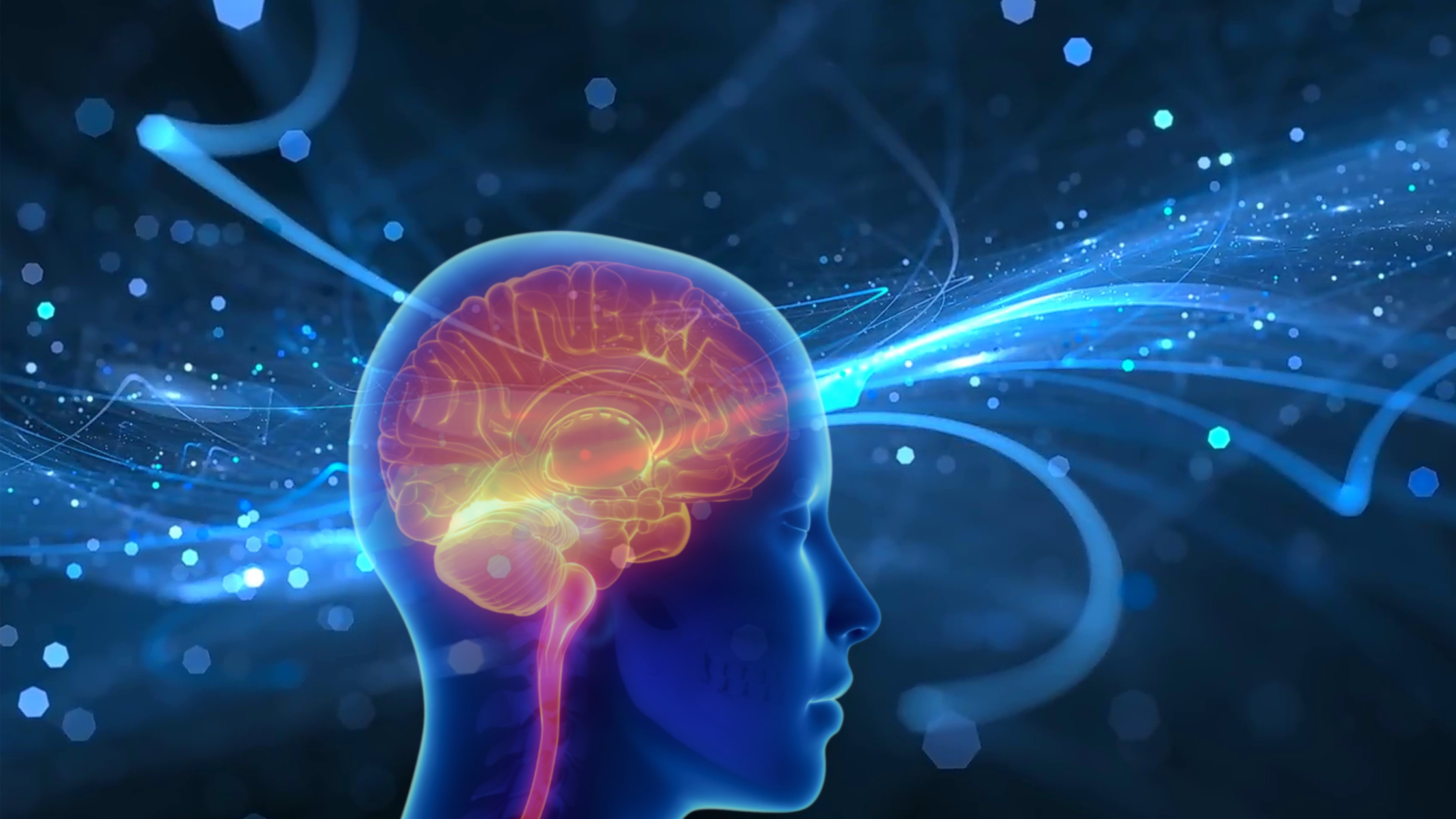
 The Pain-Brain Connection: Why Chronic Pain Can Persist
How the brain and nervous system shape pain—and where microcurrent may fit within a broader pain-resolution plan
Overview: Understanding the Pain-Brain Connection
In this article, we’ll look at:
- Why pain is more than a signal coming from an injured body part
- How acute pain can become persistent or chronic
- What pain sensitization means
- Why stress and sleep can influence how pain feels
- Why chronic pain treatment often needs to address more than the painful area
- Where microcurrent may fit within the Pain Free For Life approach
Your brain is involved every time you feel pain.
Touch a hot pan and your nervous system reacts almost instantly. Twist an ankle and signals from the injured area travel through the nervous system, contributing to pain that encourages you to protect the injury. This protective system is one of the reasons pain is so important.
But chronic pain introduces a more complicated question: What happens when pain continues for months or years?
Sometimes an ongoing source of tissue damage, inflammation, disease, nerve injury, or another medical problem continues generating pain. In other cases, the original injury has healed while changes within the nervous system help keep pain more easily triggered or amplified.
This is also why nervous-system regulation has become an important part of the chronic-pain conversation. Our guide to microcurrent and nervous-system regulation explores how Pain Free For Life approaches nervous-system support in chronic and autoimmune conditions.
None of this means persistent pain is imaginary or “all in your head.” It means pain is an experience shaped through communication among the body, nerves, spinal cord, brain, and nervous system—and that communication can change over time.
Understanding that relationship gives us a much better starting point for thinking about chronic pain.
Your Brain Is Part of Every Pain Experience

Think of your brain as mission control for the body. It receives and processes enormous amounts of information while helping regulate movement, breathing, memory, sensation, emotion, sleep, digestion, and countless other functions required to keep us alive.
Pain is part of that communication system, but it isn’t simply a message traveling unchanged from an injured knee, back, or shoulder directly into consciousness. Sensory information travels through nerves and the spinal cord, where it is processed along the way, while the brain interprets that information in the context of what is happening throughout the body and what it has learned from previous experiences.
This is one reason two people can experience similar injuries differently—and why the same person’s pain can change from one day to another.
Pain is real, but pain intensity is not always a direct measurement of tissue damage.
Acute Pain and Chronic Pain Aren’t Quite the Same Thing
Acute pain is often protective. If you sprain an ankle, cut your hand, or undergo surgery, pain can encourage you to protect an injured area while the body begins repairing it. As healing progresses, that pain would generally be expected to improve.
Chronic pain is more complicated.
Pain that lasts for months or years may still involve an ongoing physical problem such as arthritis, nerve damage, inflammation, scar tissue, or another health condition. But persistent pain can also involve changes in the way the nervous system responds to and processes incoming signals.
Researchers sometimes describe this increased responsiveness as sensitization. With peripheral sensitization, nerves around an injured or inflamed area can become more responsive. With central sensitization, changes within the central nervous system may contribute to increased sensitivity, allowing sensations that would normally be less painful—or not painful at all—to produce a stronger response.
This helps explain why chronic pain cannot always be understood simply by asking, “Where is the damage?”
When the Nervous System Becomes More Sensitive
Think of pain less like a simple on/off fire alarm and more like an adjustable protective system.
After an injury, turning up sensitivity can be useful. An injured ankle should probably make you think twice before running down the stairs, while tenderness around a surgical area can encourage you to protect healing tissue. The problem arises when heightened sensitivity persists beyond the period when it is useful.
Someone may become more sensitive to pressure, movement, temperature, or touch. Pain may spread beyond its original location, or an activity that once caused mild discomfort may begin producing a much stronger response.
Nervous-system regulation doesn’t mean trying to convince yourself that pain isn’t real. It means recognizing that the nervous system can become more reactive over time and that movement, rest, social connection, stress management, and appropriate treatment may all become relevant to the larger pain picture.
Our guide to polyvagal theory and chronic pain looks more closely at nervous-system regulation, perceived safety, social connection, and the role these factors may play in chronic-pain recovery.
Sensitization has been studied in several chronic-pain conditions, including fibromyalgia, migraine, osteoarthritis, low-back pain, and some forms of neuropathic pain. Our updated guide to natural remedies for fibromyalgia looks at one condition in which increased pain sensitivity and altered pain processing can be particularly relevant.
None of this means you should assume persistent pain is caused by sensitization. New, changing, or unexplained pain still deserves appropriate medical evaluation. The nervous system is one piece of the pain picture, not a reason to stop investigating the body.
Pain Doesn’t Exist in Isolation
One reason chronic pain can become so difficult is that the nervous system is responding to much more than one painful body part.
Sleep is a good example. Pain can make it difficult to get comfortable, fall asleep, or remain asleep. Poor or fragmented sleep, in turn, can increase pain sensitivity and make an already uncomfortable body more difficult to manage the following day.
Stress can add another layer to the picture. Living with persistent pain is stressful in itself, and prolonged stress can influence sleep, muscle tension, movement, recovery, and nervous-system activity. Mood, previous pain experiences, fear of reinjury, activity level, inflammation, and other health conditions may also influence how someone experiences pain.

For people who want to understand that mind-body piece without having their physical pain dismissed, Mentally Coping With Chronic Pain: A Holistic Guide explores emotional support, the mind-body connection, and practical coping strategies alongside physical care.
This doesn’t make chronic pain psychological. It means the experience of pain can be influenced by biological, neurological, physical, emotional, and environmental factors that interact with one another.
What About Pain Medication?
Pain-relieving medications can vary in time and place, depending on the cause and type of pain. Healthcare professionals may use anti-inflammatory medications, acetaminophen, medications for neuropathic pain, muscle relaxants, certain antidepressants or anti-seizure medications, and other options. These treatments have different mechanisms, potential benefits, limitations, and risks.
Opioids require particular care. They may be appropriate in certain circumstances, including some acute pain, cancer-related pain, palliative care, and carefully selected situations. Long-term opioid therapy also carries important risks, including tolerance, physical dependence, opioid use disorder, and overdose. In some people, prolonged opioid exposure may also be associated with increased sensitivity to pain, a phenomenon known as opioid-induced hyperalgesia.
That is very different from saying that everyone who takes pain medication is simply masking a problem or making pain worse.
Medication decisions should be individualized and made with an appropriate healthcare professional. If you’re taking prescription pain medication, don’t stop or change it abruptly based on something you’ve read online.
For more context on opioids and chronic pain, read The Simplicity of Prescribing Opioids for Pain Has Created an Epidemic in America.
Chronic Pain Often Requires More Than Treating the Painful Spot
If chronic pain can involve both the body and changes in nervous-system processing, treatment may need to look beyond the location that hurts most.
That can mean investigating and addressing an underlying medical condition while also considering factors such as:
- Previous injuries
- Fully healed surgical scars
- Nerve involvement
- Movement and physical conditioning
- Sleep
- Stress
- Nutrition
- Nervous-system regulation
- Patterns that make symptoms better or worse
This whole-body perspective is also central to What Does It Really Mean to Heal Holistically?, which explores how nutrition, movement, sleep, stress reduction, and microcurrent can work together rather than treating each part of health in isolation.
It is also why communicating the larger pattern to your healthcare provider can be so valuable. Where something hurts matters, but so does when it began, what preceded it, what triggers it, how it affects sleep and movement, and what you can no longer do as comfortably as you once could.
Where Microcurrent May Fit

At Pain Free For Life, microcurrent is one tool used within a broader approach to chronic pain.
Microcurrent delivers very low-level electrical current through the body using a compatible device and treatment method. Depending on the device and protocol, treatment may focus on a painful area, fully healed scar tissue, nervous-system support, or another specific concern.
The goal isn’t to simply “turn off” the brain’s pain alarm. Instead, Pain Free For Life protocols consider what may be contributing to the pain, what tissues or systems are involved, and which type of treatment makes sense for that individual.
Someone with an old surgical scar may require a different approach from someone with a painful knee, neuropathy, muscle tension, disrupted sleep, or prolonged nervous-system strain.
For a broader look at the technology and its place in chronic-pain care, see The Benefits of Microcurrent Therapy for Pain Management & Healing.
If you’re completely new to the technology, our plain-language guide to microcurrent therapy provides a more introductory explanation of what microcurrent is and how it differs from other forms of electrical stimulation.
Visit The Sana Shop to explore Avazzia Life microcurrent devices, conductive accessories, and other wellness tools.
The Brain Is Part of a Larger Nervous-System Picture
The relationship between pain and the brain is only one part of a much larger nervous-system conversation.
Pain, sleep, stress, autonomic function, movement, and recovery can influence one another, which is why a nervous-system-focused treatment may sometimes be considered alongside work directed at a specific painful area.
Within Pain Free For Life protocols, Vagus Nerve Stimulation is one approach used when nervous-system regulation is part of the treatment goal. Our guide to microcurrent Vagus Nerve Stimulation explains the technique, equipment, and PFFL approach in greater detail.
Brain health itself also depends on much more than pain signaling. Sleep, circulation, cellular energy, inflammation, stress, and nervous-system tone can all influence how clearly and resiliently the brain functions. Microcurrent for Brain Health explores those relationships in more depth.
What About Interactive Microcurrent Biofeedback?
Some Avazzia Life devices also incorporate interactive biofeedback capabilities.
Rather than assuming that all forms of biofeedback work the same way, it is useful to understand what a particular system is actually measuring and doing. Traditional physiological biofeedback, EEG neurofeedback, and interactive microcurrent biofeedback are different technologies.
With compatible Avazzia Life devices, interactive microcurrent biofeedback can measure changes in the electrical characteristics of the treatment area and use that information to help guide treatment.
Our Biofeedback Versus Neurofeedback guide takes a closer look at those differences and explains where interactive microcurrent fits.
This gives us a more accurate way to discuss the feedback component of treatment than the idea that a device simply “signals the brain’s attention” to an area and tells it to stop causing pain.
The Goal Is Better Communication, Not Silencing Pain
Pain is protective, but persistent pain can become extraordinarily disruptive. It can change how you move, sleep, work, exercise, socialize, and think about what your body is capable of doing.
Understanding the pain-brain connection gives us a more useful way to think about that experience. The goal isn’t to ignore pain, silence every signal, or assume that every chronic-pain problem originates in the brain. It is to recognize that the painful tissue, nerves, spinal cord, brain, sleep, stress, movement, previous injuries, and other aspects of health can all influence the larger pain experience.
That broader view is central to The Hache Protocol for Pain Resolution™, which considers five interactive elements: stress reduction, nutrition, fitness, sleep, and microcurrent.
When several pieces are contributing to chronic pain, addressing only one may leave important parts of the picture untouched. Understanding what is actually happening gives you and your healthcare team a better starting point for deciding what deserves attention next.
We’re Here to Help

Have questions about chronic pain, the pain-brain connection, microcurrent therapy, or choosing an Avazzia Life device? Our team is here to help and will respond within 48 business hours.
Call: 1-888-758-0851 in North America or 415-688-2045 internationally
Email: support@painfreeforlife.com
Text: +1 (415) 688-2045
For additional education about chronic pain, microcurrent therapy, nervous-system regulation, and The Hache Protocol™, visit the Pain Free Living Lab.
Sources Cited
International Association for the Study of Pain. IASP Announces Revised Definition of Pain.
https://www.iasp-pain.org/resources/terminology/
National Institute of Neurological Disorders and Stroke. Pain.
https://www.ninds.nih.gov/health-information/disorders/pain
National Center for Complementary and Integrative Health. Chronic Pain: What You Need To Know.
https://www.nccih.nih.gov/health/chronic-pain-what-you-need-to-know
National Institute on Drug Abuse. Prescription Opioids DrugFacts.
https://nida.nih.gov/publications/drugfacts/prescription-opioids
National Institute of Neurological Disorders and Stroke. Central Pain Syndrome.
https://www.ninds.nih.gov/health-information/disorders/central-pain-syndrome